Starting a pasta unit usually begins with one question: which machine should we buy, and who should we buy it from? The market has plenty of pasta making machine manufacturers, and their brochures can look surprisingly similar. The real differences show up months later, in how evenly the dough extrudes, how often the die needs attention, and how quickly someone answers the phone when a line stops. This guide walks through the points that matter most, so you can compare your options calmly and pick a machine that fits your plant, not just your budget on day one.
Start With Your Production Plan, Not the Machine
Before you contact any manufacturer, write down five things: the output you want per hour, the pasta shapes you plan to sell, the raw material you will use (durum semolina or wheat flour), how many shifts you will run, and the floor space and power supply you have. These details decide whether you need an industrial pasta making machine or a smaller starter unit.
A founder planning one shift a day for local retail packs has very different needs from a plant that wants to supply institutional buyers around the clock. When you share these numbers upfront, a good manufacturer can recommend a configuration instead of pushing whatever is in stock.
Automatic vs Semi-Automatic Pasta Machine
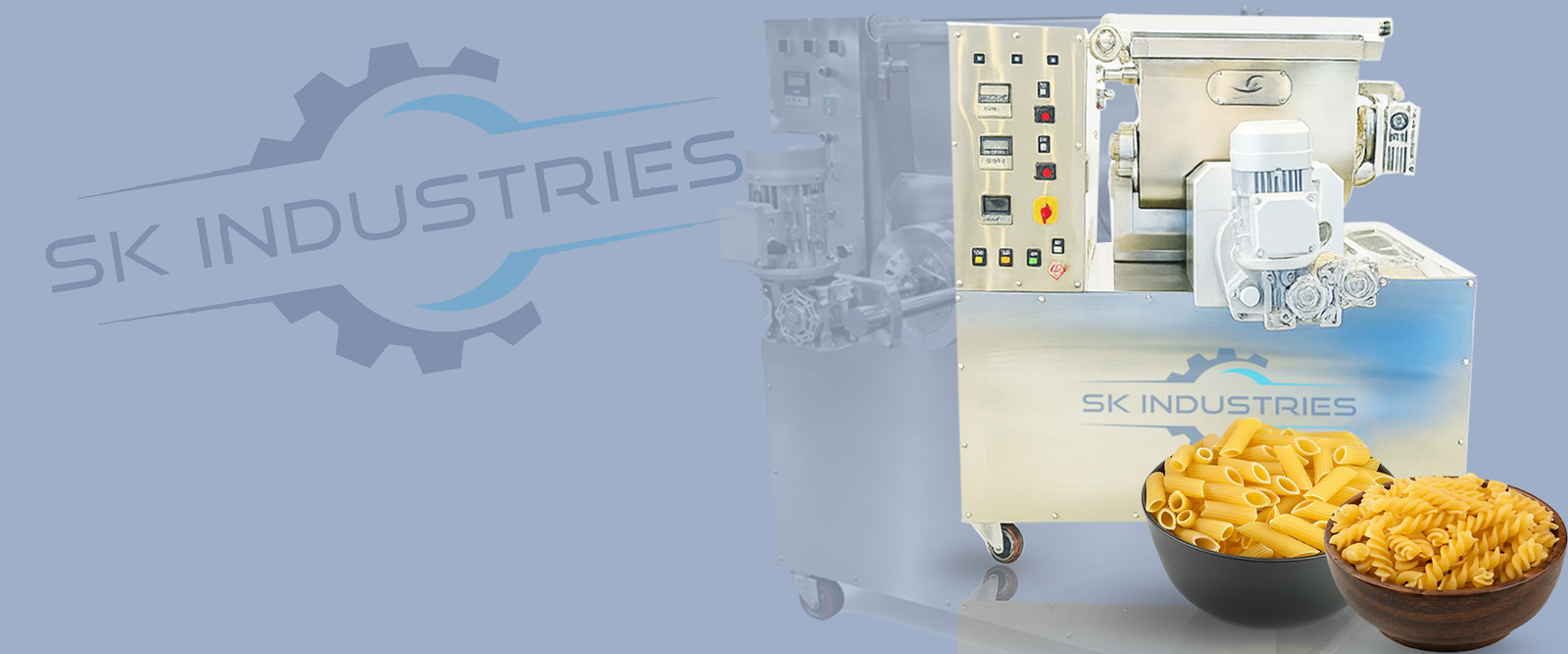
This is the first big decision. An automatic pasta machine is controlled through a PLC panel with a variable frequency drive, so dough feeding, extrusion speed and cutting stay consistent with very little manual intervention. The SK Industries automatic model, for example, runs at up to 200 kg per hour.
A semi-automatic pasta machine keeps the same SS 304 food-grade build but needs more operator involvement. It is a sensible choice for smaller producers, for businesses testing a new brand in the market, or for anyone who wants a lower entry cost. If you expect to grow within a year or two, ask whether the machine can later be paired with a bigger dryer and an upgraded line.
What Goes Inside a Good Pasta Extruder
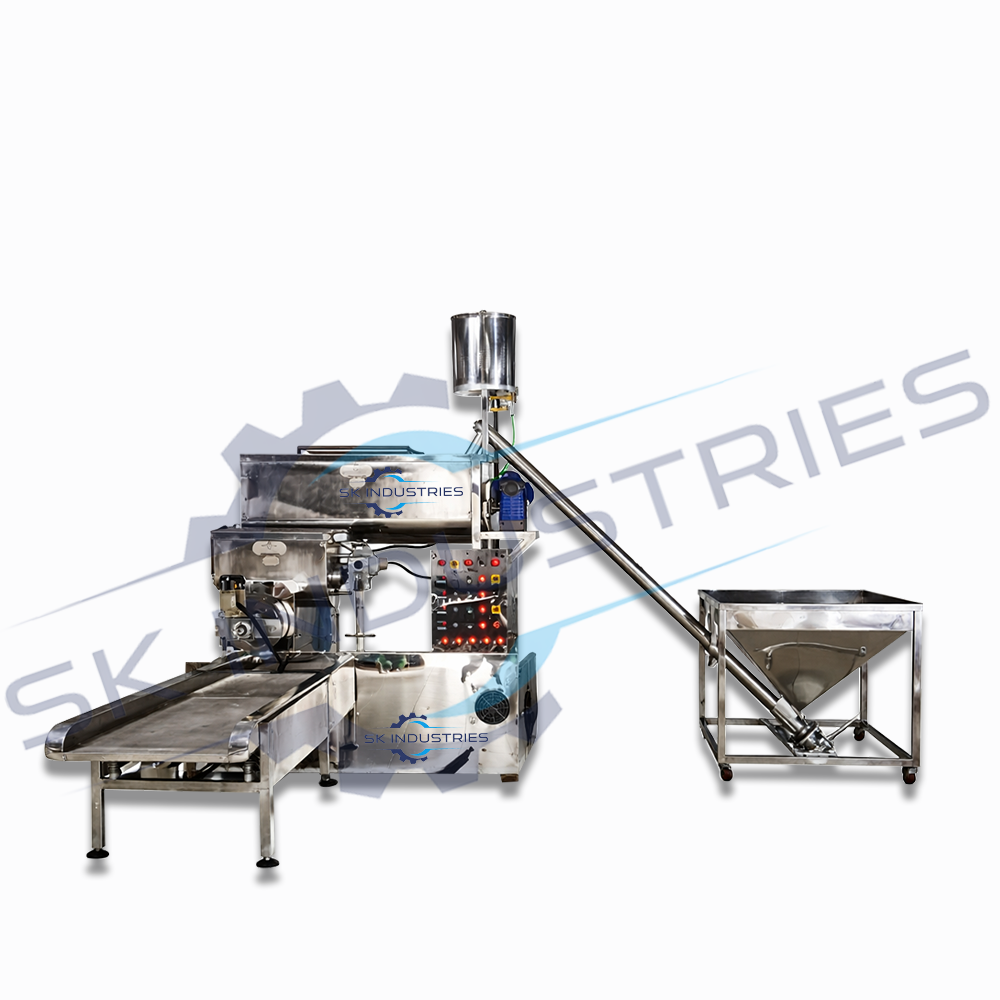
The pasta extruder is the heart of the line, so it deserves a closer look than the outer panel. Ask about these parts:
- Mixing chamber: It should wet the semolina evenly. Dry pockets in the dough show up later as white spots or weak strands.
- Extrusion screw and barrel: They build the pressure that pushes dough through the die. Smooth, steady pressure gives a uniform product.
- Die: The die decides the shape and the surface finish of your pasta.
- Cutter: Its speed should match the extrusion rate, otherwise the cut length varies.
- Food-contact material: All parts that touch dough should be SS 304 stainless steel, which is hygienic and resists corrosion.
Many industrial lines also use vacuum-assisted extrusion. Removing air from the dough helps reduce tiny bubbles, which supports better colour and a stronger finished product. If a manufacturer offers it, ask how it works on their machine.
Short Cut Pasta Shapes and the Role of Dies
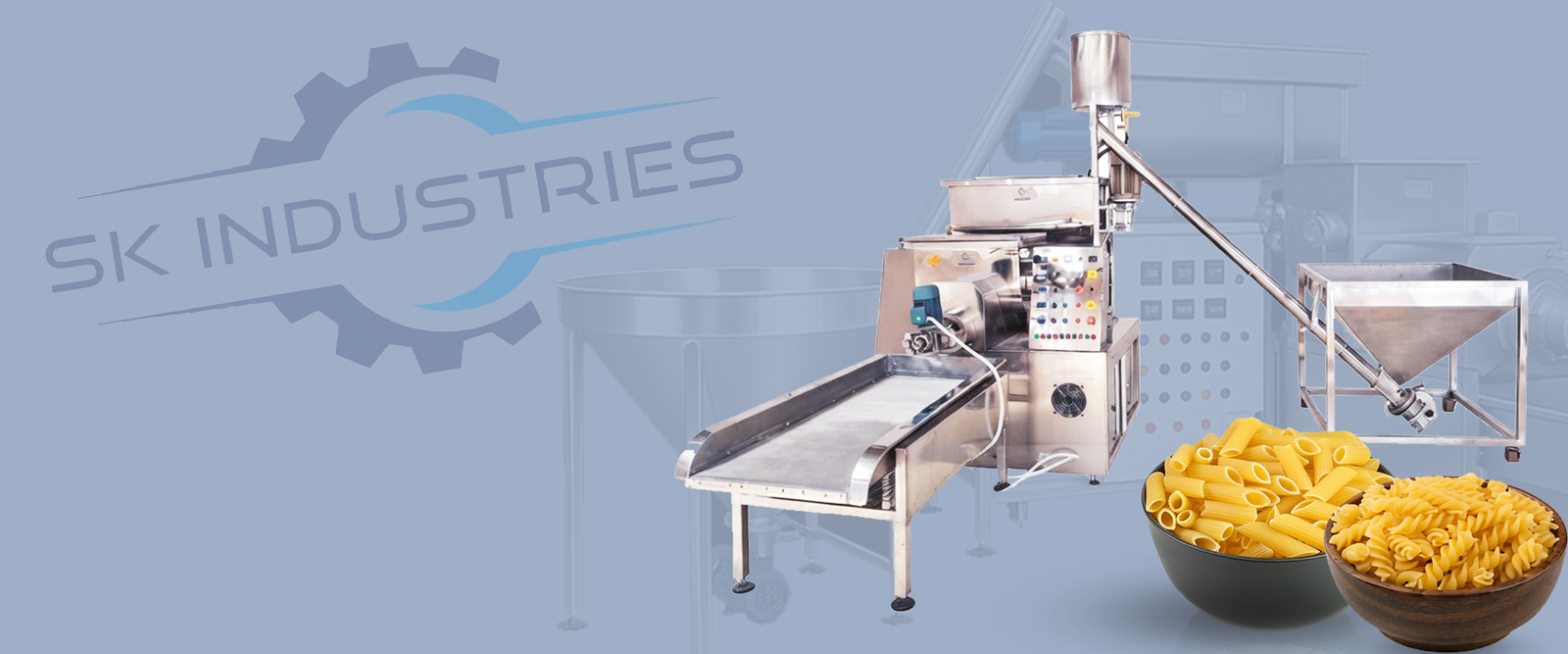
Most new units begin with short cut pasta such as macaroni, penne and fusilli. The good news is that one base machine can often make several of these shapes. You change the die and the cutter setup, and the rest of the machine stays the same.
That makes the die policy worth discussing before you order. How many dies come with the machine? What does an extra die cost, and how long does it take to make one? A manufacturer who answers these questions clearly is usually one who has handled them many times.
The Machine Is Only One Part of the Pasta Plant
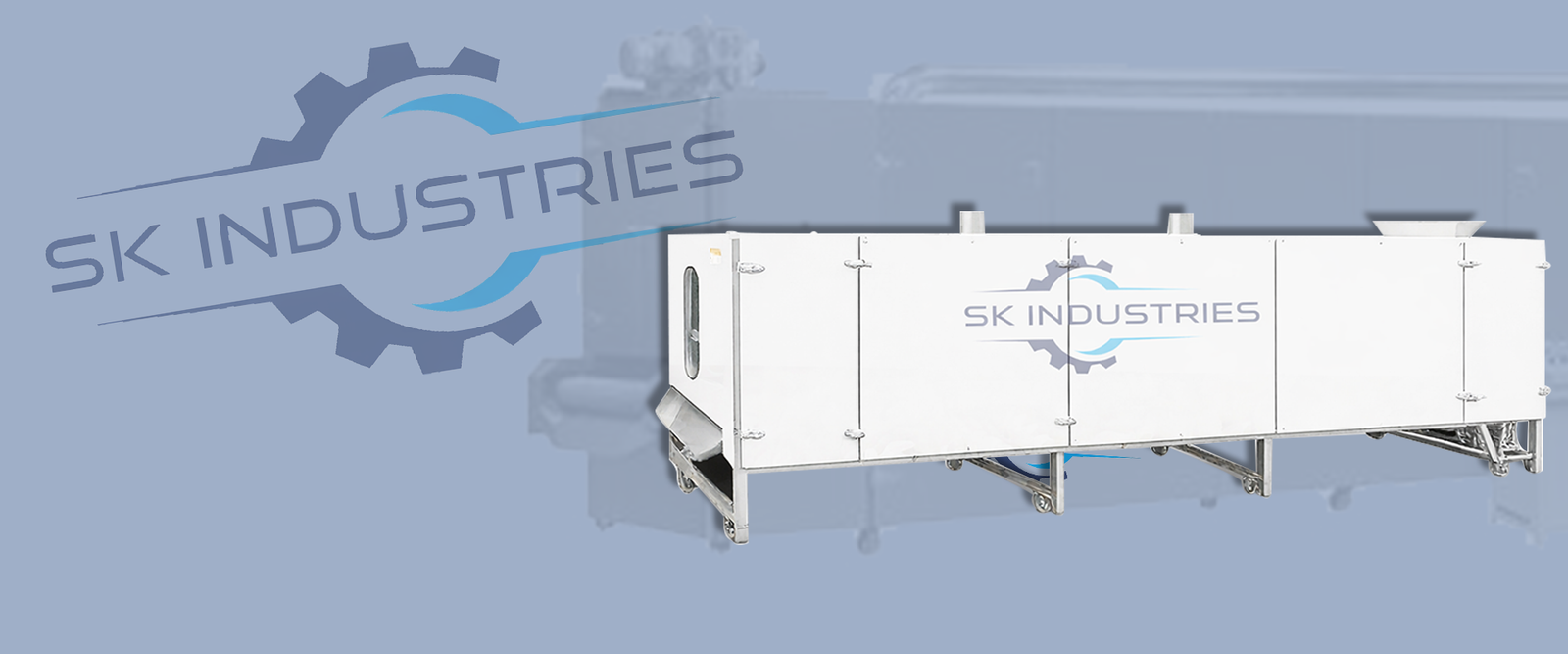
Freshly extruded pasta carries a lot of moisture, and it cannot be packed in that state. A complete pasta plant therefore needs drying, and often conveying, sifting and packing as well. A continuous conveyor dryer takes the cut pasta through controlled heat on a moving belt, so it leaves the dryer stable and ready for packing. Smaller batches can use a static dryer instead.
When you compare pasta making machine manufacturers, check whether they can supply the whole line. Capacities must also match. An extruder that makes more pasta than the dryer can handle simply creates a queue at the dryer, and you end up paying for capacity you cannot use.
Questions to Ask Before You Place an Order
A short list of direct questions can tell you a lot about a supplier:
- Which parts are made of SS 304, and can this be confirmed in writing?
- Which brands of motors, drives and electrical components are used?
- Can you run a trial with my own flour or semolina?
- Who handles installation, commissioning and operator training?
- How are spare parts supplied, and how fast?
- What does the warranty cover, and is it written into the quotation?
Understanding Pasta Machine Price
Pasta machine price depends on capacity, the level of automation, the number of dies, the build material and whether a dryer is included. The most common mistake is comparing two quotations that do not cover the same things. One may leave out the dryer, extra dies or installation, which makes it look cheaper than it really is. Ask every supplier to list exactly what is included, and compare like for like.
Visit, Test, and Then Decide
If you can, visit the manufacturer's facility. Seeing machines being built and tested tells you more than any catalogue. Ask to watch a machine run, look at the welding and finish on the stainless steel, and talk to the engineers who will support you after delivery.
SK Industries has been manufacturing food processing machinery in Noida for over 20 years, including pasta machines, dryers, roasters and conveyors. If you would like help matching a machine to your capacity and budget, you can contact our team and share your production plan. We will suggest a practical configuration and explain the reasoning behind it.