Many food producers spend weeks choosing an extruder, mixer or roaster, and only then ask how they will dry the product. That order can be expensive. Drying decides how long your product lasts on the shelf, how well it holds its shape, and how much output your plant can really deliver. If you are comparing continuous dryer manufacturers, this guide explains how these machines work, which specifications matter, and which questions help you avoid costly surprises.
Why Drying Is So Important in Food Processing
Fresh products such as extruded pasta, vermicelli and many snacks contain a lot of moisture when they come off the forming machine. Left as they are, they can sag, stick together or spoil. Drying removes the moisture in a controlled way so the product becomes stable for storage and packing. Dried pasta, for example, is generally kept at a moisture level of around 12 to 13 percent.
The way you dry matters as much as the final moisture level. Drying too aggressively can crack or warp the product, while drying too slowly wastes time and energy. A well-designed dryer finds the balance and repeats it every shift.
How a Continuous Conveyor Dryer Works
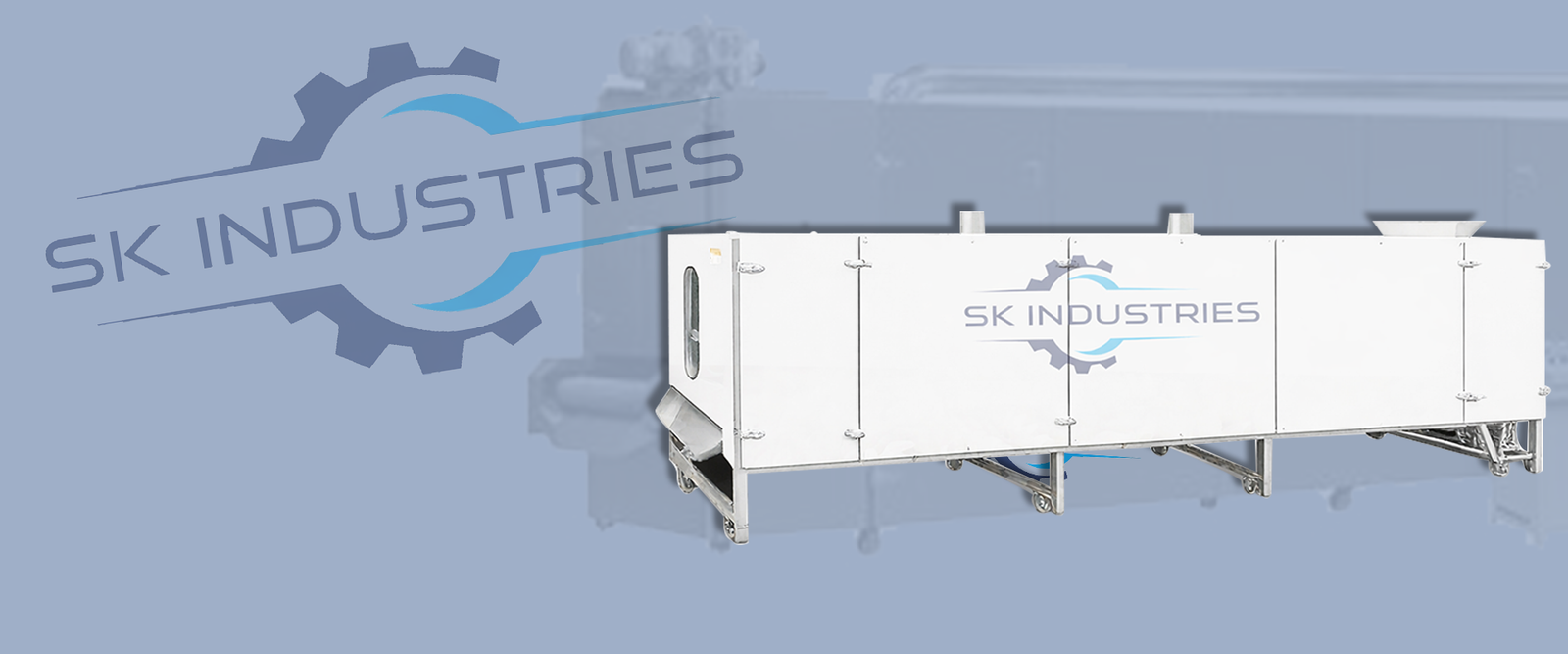
A continuous conveyor dryer moves the product through a heated chamber on a belt, without stopping. The belt is usually a stainless steel wire mesh that lets hot air pass through the product. Heated air circulates inside the chamber, collects moisture from the product and carries it out. Temperature, airflow and belt speed are set to suit each product.
Because the product enters at one end and leaves at the other in a steady stream, the process is well suited to lines that run for long hours. The continuous conveyor dryer from SK Industries follows this design, using a multi-layer belt arrangement to give a large drying surface in a compact footprint.
Specifications That Deserve Your Attention
Brochures often list a lot of numbers. These are the ones that tell you the most:
- Capacity: Look for the output per hour for your specific product, not a general figure. The SK Industries model is rated for 450 to 500 kg per hour.
- Number of belt layers: More layers give more drying area within the same floor space. Our model uses a 7-layer belt system.
- Temperature range: A wide range, such as 20 to 160 °C, lets the same dryer handle gentle and more intensive drying.
- Belt speed: Adjustable speed, for example from 0.1 to 10 metres per minute, controls how long the product stays inside.
- Belt material: An SS 304 wire-mesh belt is hygienic, resists corrosion and is easy to clean.
- Dimensions: Check the length and width against the space in your plant. Our model measures 8.4 × 1.3 × 1.8 metres.
Multi-Layer Belt Dryer vs Static Dryer
A static dryer holds trays or racks in a chamber while the product dries in batches. It is a simple, lower-cost option and works well for smaller volumes or when you change products often. A multi-layer belt dryer, on the other hand, handles higher volumes in a steady flow with less manual handling. As your production grows, the labour saved by continuous drying usually becomes the deciding factor.
Heating Source and Running Cost
A continuous dryer can be heated by electricity, gas or steam, depending on the design and what is available at your site. Each option affects installation and running costs in a different way. Electric heating is simple to install, while gas or steam can be more economical where those utilities are already in place. The SK Industries model lists a heating power of 96 kW, which gives you an idea of the energy load to plan for. Ask each manufacturer to explain the options and help you estimate the running cost for your product.
Even Drying Depends on Airflow
A dryer can have the right temperature and still dry unevenly if the air does not move properly. Product near the air inlet may dry faster than product near the outlet, which leads to mixed moisture levels in the same batch. Ask how the manufacturer designs airflow across the belt layers, and whether airflow can be adjusted. Uniform drying across all layers is the quality that separates a dependable dryer from a merely large one.
Match the Dryer to the Rest of Your Line
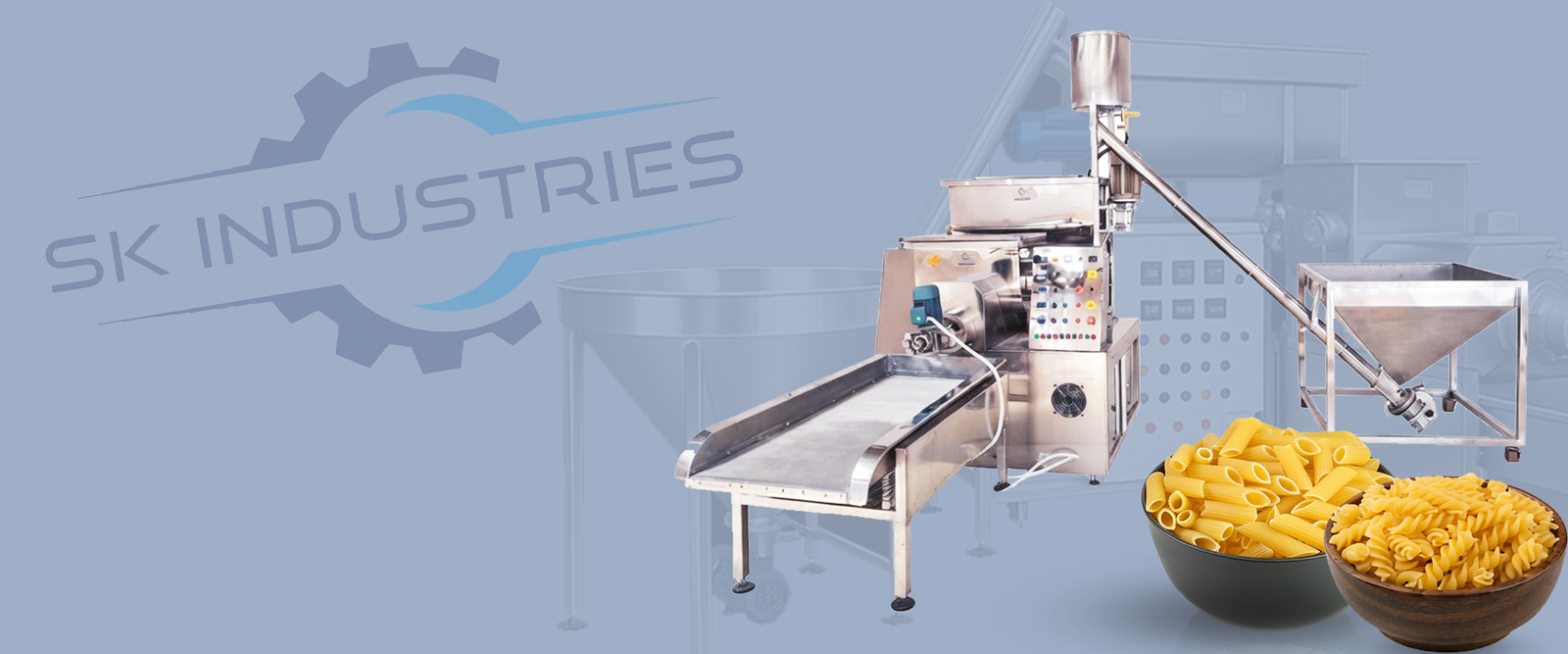
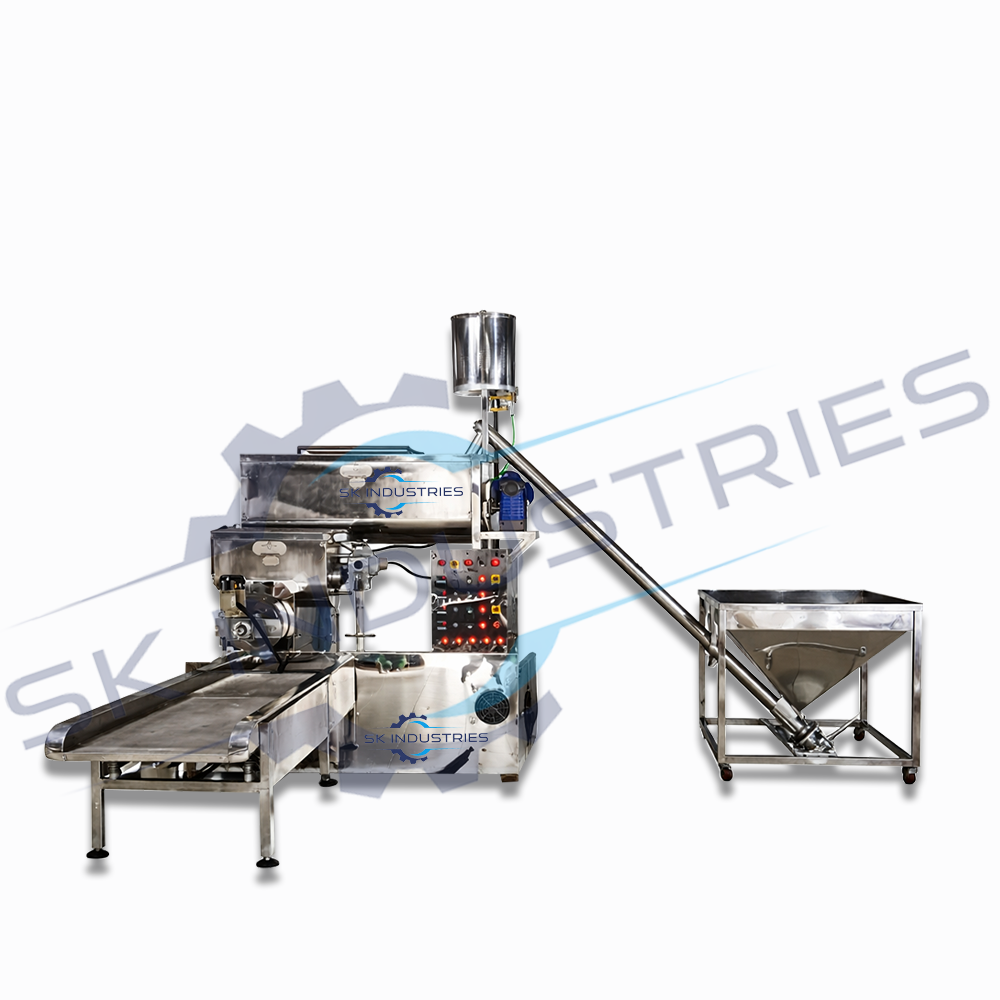
A dryer rarely works on its own. It usually sits after an extruder such as a pasta making machine, and before a roaster, sifter or packing station. The capacity of each machine should fit its neighbours. An oversized dryer with a small extruder wastes energy, and an undersized dryer with a large extruder creates a queue of wet product. Choosing a manufacturer that also builds the other machines on your line makes this matching much easier.
Cleaning, Maintenance and Safety
Food dryers need regular cleaning. Look for easy access doors, a mesh belt that can be cleaned without special tools, and smooth internal surfaces that do not trap residue. Ask about the parts that wear over time, such as belts, bearings, fans and heating elements, and how quickly replacements can be supplied. Also check temperature controls and safety cut-offs, since a heater that runs unchecked can damage both the product and the machine.
Questions to Ask Continuous Dryer Manufacturers
- What is the rated capacity for my product and starting moisture?
- Which parts touching the product are made of SS 304?
- How are temperature and belt speed controlled and displayed?
- Which heating options are available, and what are the likely running costs?
- Can the dryer be installed and commissioned by your team?
- What is the warranty, and how are spare parts supplied?
Speak With Our Team
SK Industries designs and builds continuous conveyor dryers, static dryers, roasters and conveyors at its Noida facility. If you want help choosing a dryer for pasta, vermicelli or another food product, contact us with your product, target output and available space. We will recommend a configuration that fits, and explain the reasons behind each choice.