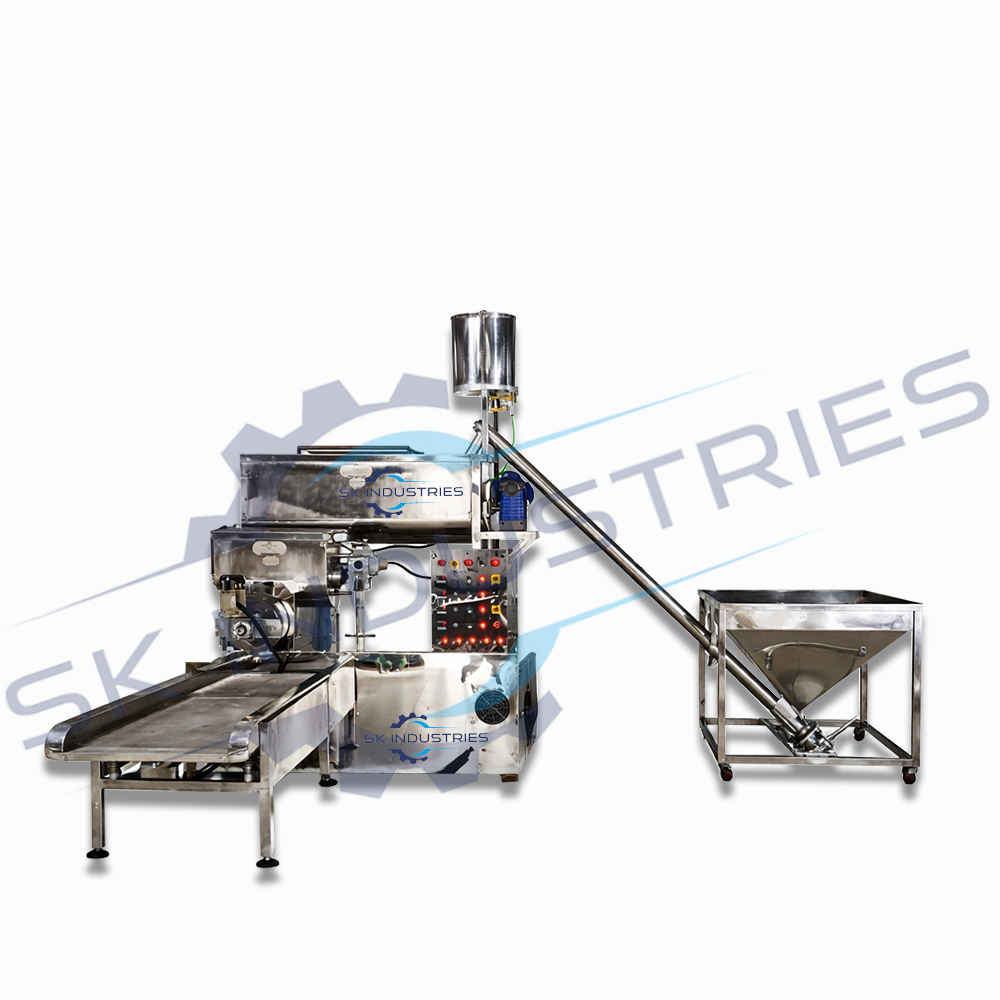
Most buyers compare vermicelli machine manufacturers by price and capacity. Plant owners who already run a line often judge them differently: by the quality problems they deal with every week. Strands of uneven thickness, pieces that snap in the pack, or bundles that stick together all cost money, and most of them can be traced to one stage of the process. Knowing which stage helps you ask sharper questions before you buy, and helps you spot a weak machine during a trial.
Why Vermicelli Shows Problems Faster Than Thicker Pasta
Vermicelli strands are very thin, and a die with many small holes extrudes dozens of them at once. Any small variation in pressure, dough moisture or die finish becomes visible right away. A thicker pasta shape can hide the same variation. This is why the die, the extrusion chamber and the dryer deserve more attention here than on most other food lines.
Common Problems and the Stage to Check
The table below links each problem to the stage that most often causes it. Treat it as a starting point for questions, not a final diagnosis, because dough and weather also play a part.
| Problem | Stage to check first | Question to ask the supplier |
|---|---|---|
| Uneven strand thickness | Die and extrusion pressure | How is pressure kept steady across the die face? |
| Rough or pitted surface | Dough mixing and air in the dough | Is the extruder vacuum-assisted? |
| Strands breaking after drying | Drying speed and temperature | Can temperature and belt speed be adjusted? |
| Strands sticking together | Cutting and early drying | How soon after cutting does the product reach the dryer? |
| Uneven colour in roasted vermicelli | Roaster heat and tumbling | Does the product move continuously through the heat? |
The Extruder and Die: Where Most Quality Is Decided
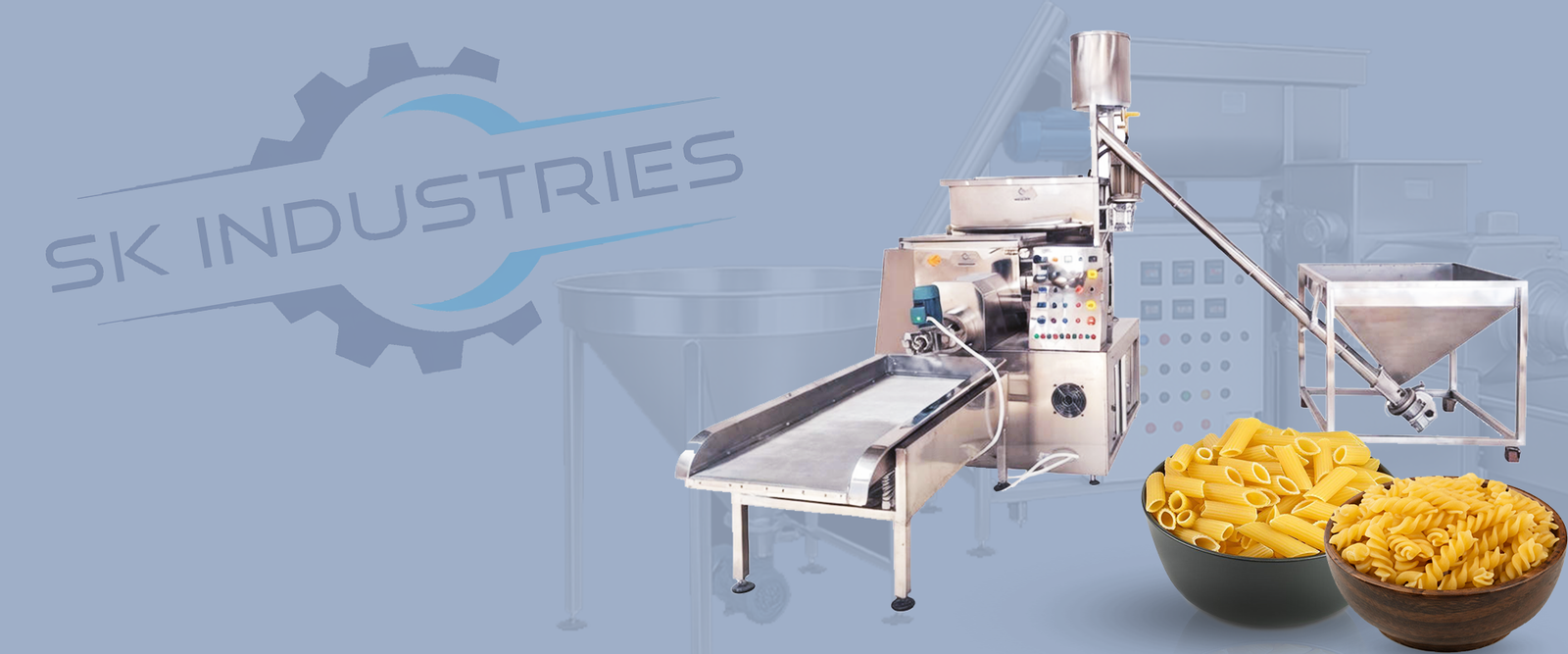
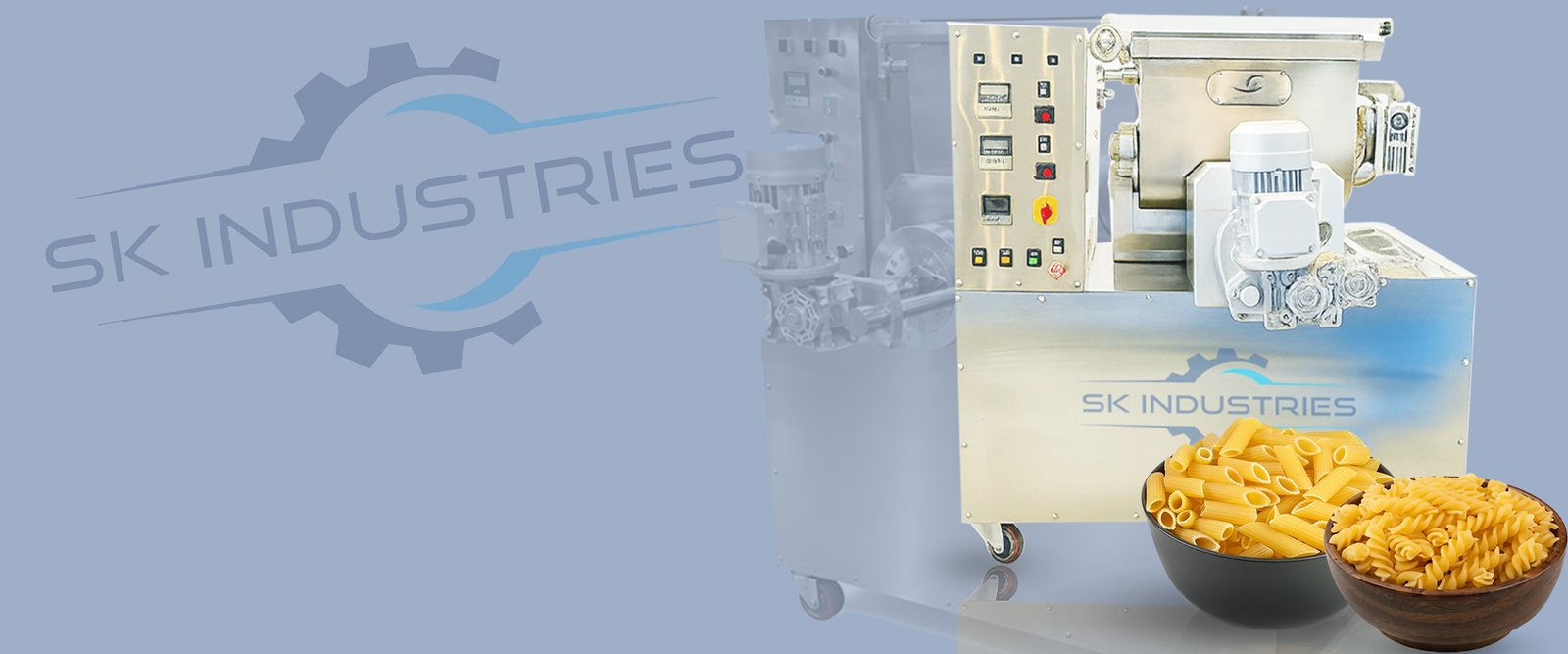
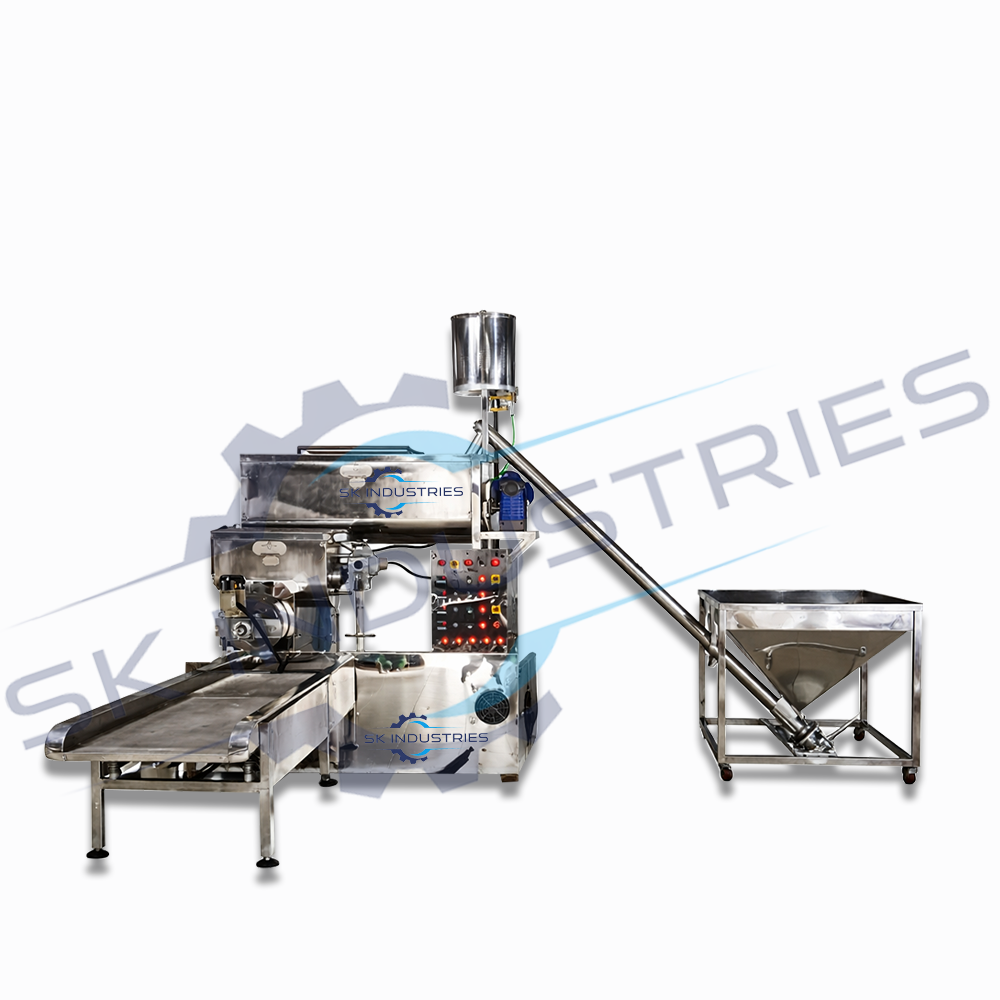
A good pasta extruder builds steady pressure and pushes dough evenly through every hole. The SK Industries vermicelli machines use precision-drilled dies and a vacuum-assisted extrusion chamber to keep strand thickness consistent across the full width of the die face. Removing air from the dough also reduces tiny bubbles that can leave a rough surface or weak spots.
When you visit a supplier, look at the die itself. Holes should look clean and even, and the supplier should be able to explain how dies are cleaned and replaced.
Drying and Roasting Without Damage
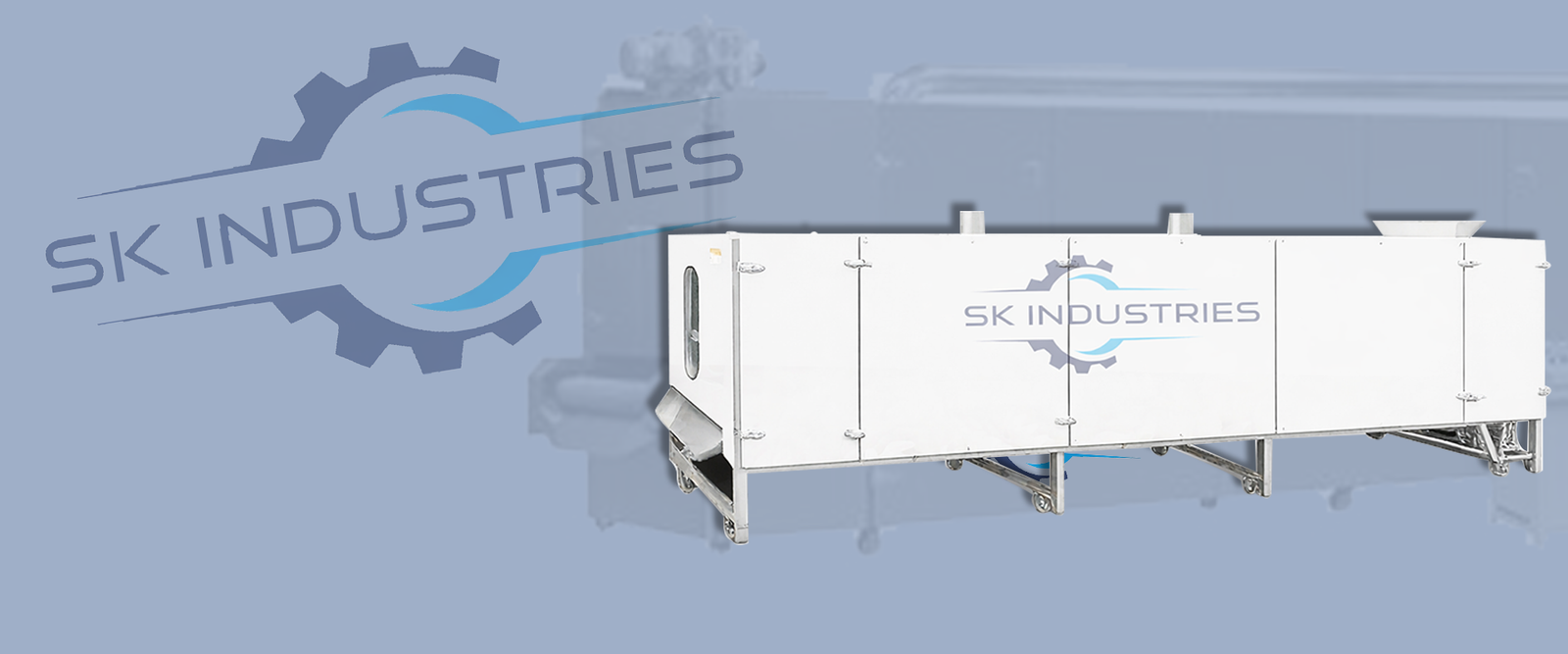
Fine strands lose moisture quickly, so the drying method matters. If the outside dries before the inside, internal stress builds up and the strands crack later. A continuous conveyor dryer with adjustable temperature and belt speed lets you set the drying time to the thickness of your product. Smaller batches can use a static dryer instead.
For roasted vermicelli, the roaster has to heat every strand evenly. The rotary roaster from SK Industries tumbles the product inside a 12-foot drum, and a hopper with a vibrating feeder keeps the flow steady. For small runs, a batch roaster may be enough.
Die Care and Cleaning Affect Quality Too
A machine can be well built and still produce poor strands if the die is not kept clean. Dried dough left in even a few holes changes the flow and shows up as thin or missing strands. Ask how the die is removed, how long cleaning takes and how many spare dies come with the machine. A supplier who has handled this many times will answer in detail, not in general terms.
The same applies to the food-contact parts around the die. Smooth SS 304 surfaces are easier to wipe down between runs, which helps when you switch from wheat to rice dough or change the strand thickness.
Cooling, Handling and Packing
Quality can also be lost after drying. Warm strands are fragile, and packing them before they cool can leave moisture inside the pack. Rough handling at transfer points breaks long strands into short pieces. When you plan the layout, leave space for the product to cool, and keep the number of drops and turns between the dryer and the packing station as low as possible.
Test Before You Commit
A trial run with your own flour shows more than any brochure. During the trial:
- Collect samples from the start, middle and end of the run, and compare thickness.
- Dry a sample and bend a few strands to see how many break.
- Cook a small portion and check that it holds its shape.
- Note whether the die needed any adjustment during the run.
Remember that wheat and rice dough behave differently. The extruder can handle both, but the die and dough formulation must suit the raw material, so tell the supplier which one you plan to use.
Frequently Asked Questions
Why do vermicelli strands break after drying?
Breakage usually comes from drying that is too fast or uneven. A dryer with adjustable temperature and belt speed lets you match the drying time to the strand thickness.
Can the same machine make wheat and rice vermicelli?
Yes. The extruder handles both wheat and rice dough, with die selection and dough formulation adjusted to the raw material.
How can I test a vermicelli machine before buying?
Ask for a trial run with your own flour, then check thickness, surface finish, breakage after drying and appearance after cooking.
Choosing a Partner for the Whole Line
Because quality problems often start in one stage and show up in another, it helps to work with a supplier who understands the whole line. Some vermicelli making machine suppliers sell only the extruder, while others also build the dryer and roaster, which makes capacity matching easier. SK Industries has manufactured food processing machinery in Noida for over 20 years. If you tell us your raw material, target output and the problems you want to avoid, our team will suggest a suitable line.