Search for pasta making machine manufacturers and you will see three kinds of companies. Some build the machines in their own workshop. Some buy machines from others and resell them. Some do a bit of both. On a website they can look almost the same, but the difference shows up the day a die wears out, a motor trips, or you want to change your pasta shape. This guide explains how to tell them apart and which checks are worth doing before you pay an advance.
Manufacturer, Supplier or Trader: What Changes for You
The labels are often used loosely, so judge the company by what it can show you, not by what it calls itself. Here is how the two main types usually differ:
| Point | Manufacturer | Reseller / trader |
|---|---|---|
| Who builds the machine | Builds it in its own workshop | Buys it from another maker |
| Changes to design | Can often adjust size, die or layout | Usually limited to what the maker offers |
| Spare parts | Can make or order directly | Depends on the original maker |
| Technical questions | Answered by the engineers who built it | May need to be passed on |
A reseller is not always a poor choice. Some are reliable and well organised. The point is to know who stands behind the machine when something goes wrong, and to get that in writing.
Checks to Make Before You Shortlist
These checks cost nothing and filter out most weak offers:
- See the machine run. A visit to the facility, or at least a live video call, shows the build quality and how the machine behaves under load.
- Get the material in writing. Parts that touch dough should be SS 304 stainless steel. Ask the supplier to state this in the quotation.
- Ask about the electricals. A PLC panel and variable frequency drive give steadier control than manual switching. Ask which components are used and who supplies them.
- Request a trial. Dough behaves differently with different semolina or flour. A trial with your own raw material tells you more than a brochure.
- Compare the scope of each quotation. Check whether dies, installation, training and a dryer are included, so you compare like with like.
Match the Machine to Your Shapes and Scale
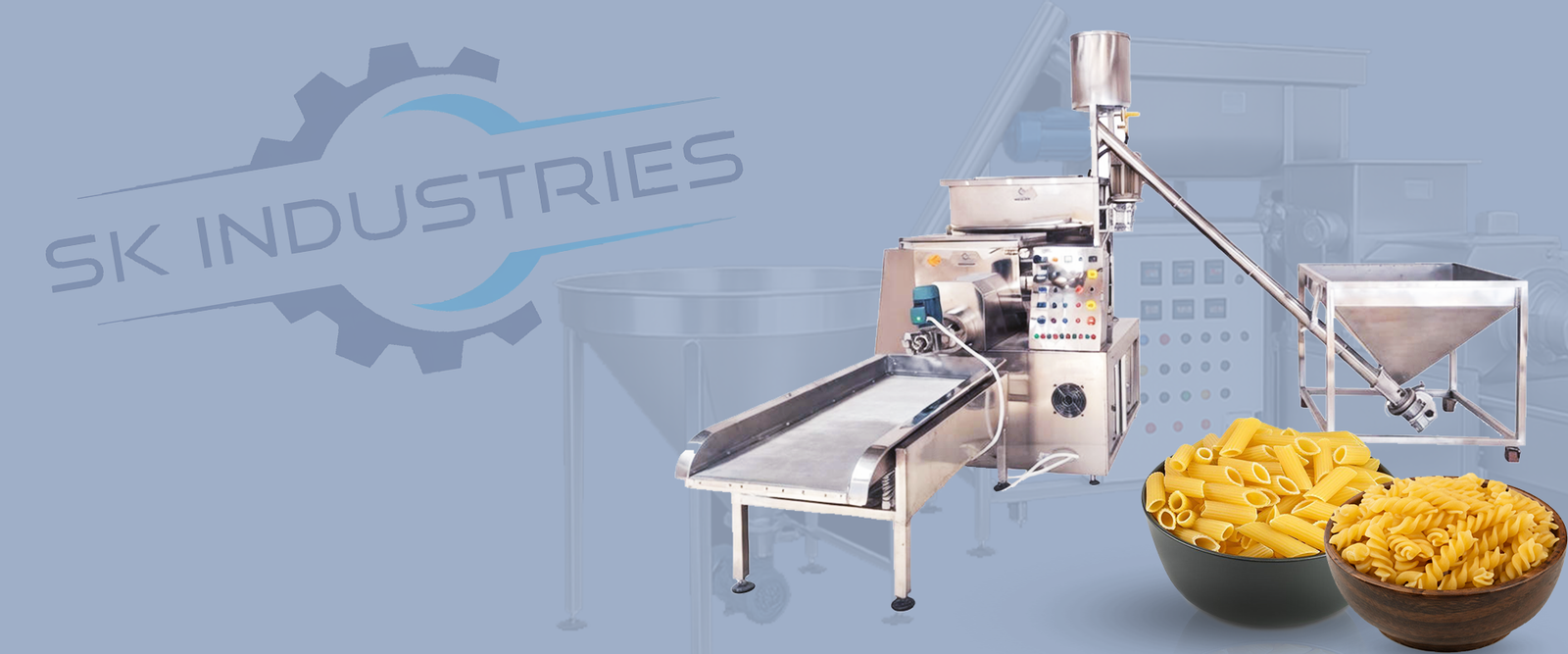
Whichever pasta making machine you consider, match it to the product first. Most new units start with short cut pasta such as macaroni, penne and fusilli. A short cut pasta making machine can make several of these shapes by changing the die and the cutter setup, so you do not need a separate machine for each product.
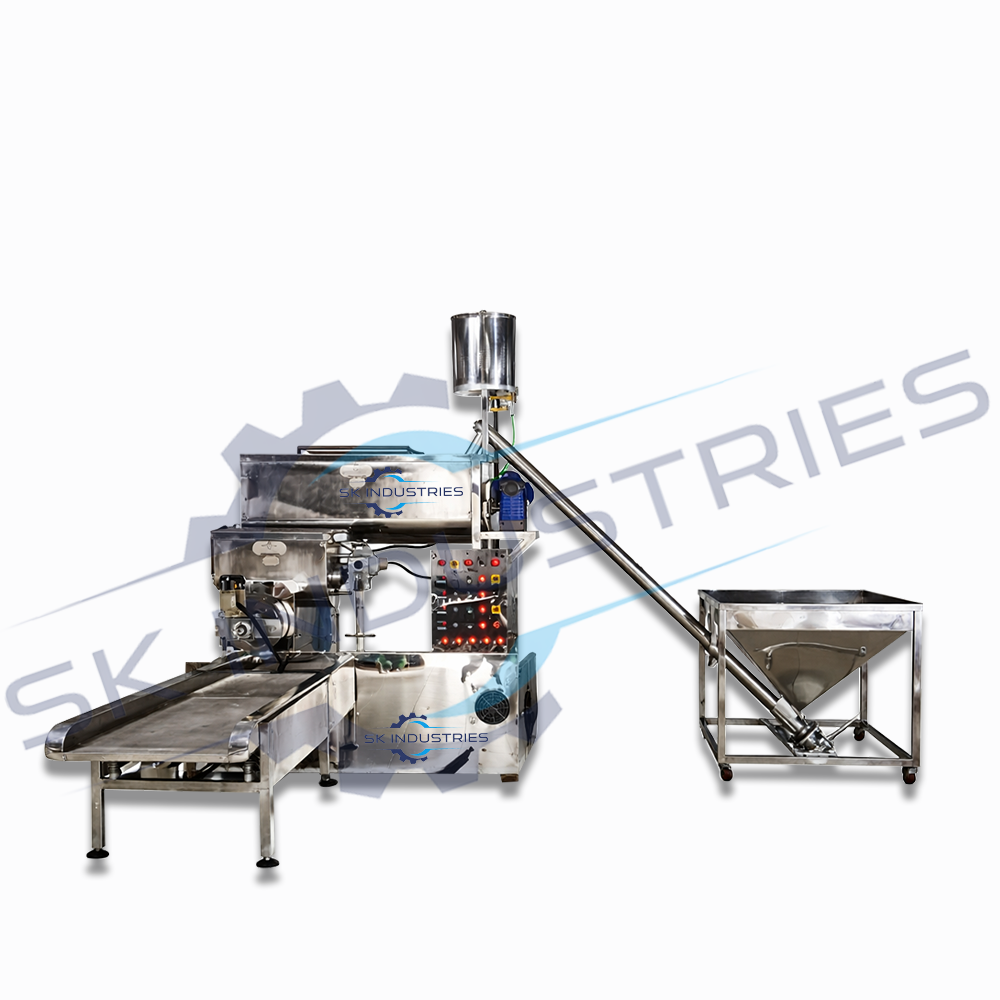
Two parts decide the quality of the result. The pasta extruder builds the pressure that pushes dough through the die, and a vacuum-assisted extruder helps produce denser dough with a better texture. The pasta cutting machine then sets the length of each piece, so its speed must match the extrusion rate.
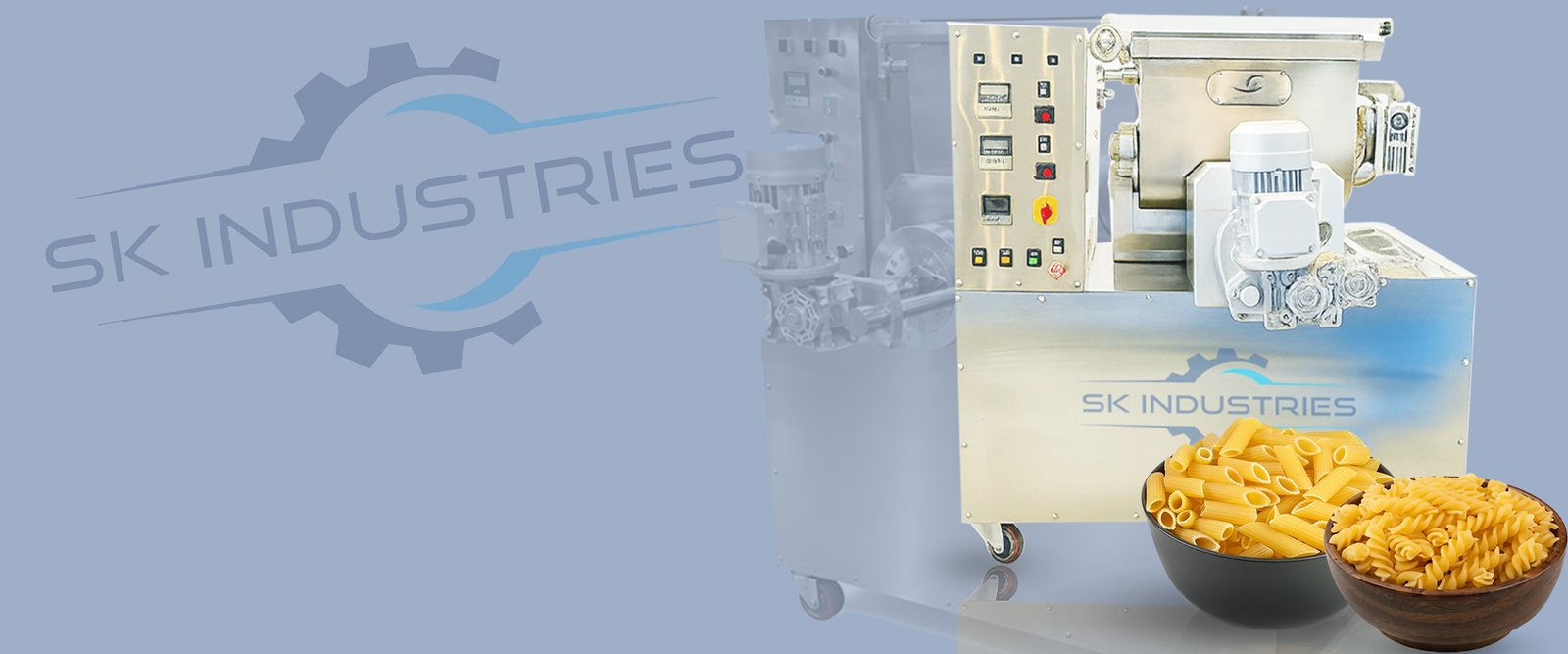
On size, the automatic pasta machine from SK Industries is PLC-controlled and runs at up to 200 kg per hour, which suits higher-volume factories. The semi-automatic pasta machine has the same SS 304 build at a lower entry cost, which suits smaller producers. Choose by the output you plan to sell in the first year, not by the largest figure on the brochure.
Think About the Whole Line, Not Just the Extruder
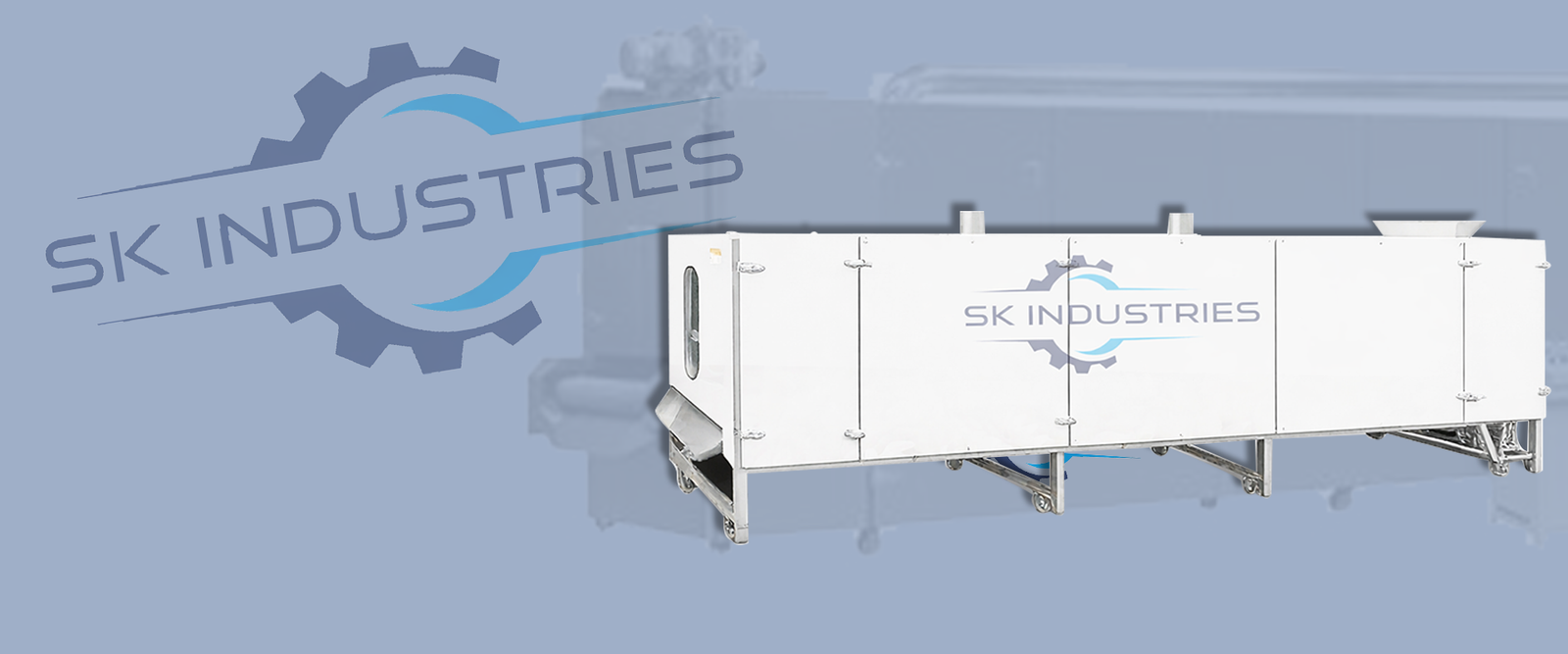
Fresh pasta leaves the extruder with a lot of moisture. For dried pasta, it must pass through a dryer before packing. A continuous conveyor dryer carries the cut pasta on a belt through controlled heat. The SK Industries dryer is rated at 450 to 500 kg per hour, so it is worth checking that the dryer rating is comfortably above your extruder output.
If you want a complete setup from one source, ask suppliers about a full penne pasta plant or similar line. A single maker designing every stage usually finds it easier to keep the capacities matched.
Ask About Support Before the Machine Arrives
A pasta line runs for long hours, so a stopped machine costs you money every day. Before you order, ask who will install and commission the machine, whether operators receive training, and how quickly spare parts such as dies, cutter blades and belts can be supplied. Ask for these answers in the quotation as well, not only on a phone call.
It also helps to speak with a few existing buyers of the same model. Ask them how the machine performed in its first year, how the supplier responded to problems, and whether the output matched what was promised. Their answers are often more useful than any specification sheet.
Frequently Asked Questions
Is it better to buy a pasta machine directly from the manufacturer?
Buying directly usually makes it easier to discuss custom needs, get spare parts and speak to the engineers who built the machine. Whoever you choose, ask for a written specification and a trial before you commit.
Can one pasta machine make different shapes?
Yes. Macaroni, penne and fusilli can be made on the same base machine by changing the die and cutter setup.
Do I need a dryer with a pasta making machine?
For dried pasta, yes. Freshly extruded pasta holds too much moisture to be packed or stored, so it must be dried first.
Should a new unit start with an automatic or a semi-automatic machine?
A semi-automatic machine suits a smaller budget and lower volumes. An automatic, PLC-controlled machine suits higher volumes with less manual handling. Your target output decides which is right.
Choosing With Confidence
The best supplier for you is the one who answers your questions clearly, shows you the machine working and puts the details in writing. SK Industries has manufactured food processing machinery in Noida for over 20 years, and our workshop is at A-66, Sector 8, Noida. If you share your target output and pasta shapes, our team will suggest a suitable configuration and explain the reasons behind it.