If you are looking for pasta making machine manufacturers in Noida, you are probably planning a new pasta unit or adding pasta to an existing food business. The questions usually come down to three things: who really builds the machine, which size fits your first year, and what you should see before paying an advance. This guide goes through each of them in plain words.
Why Many Buyers Start Their Search in Noida
Noida sits inside the Delhi NCR industrial belt, next to Greater Noida, Ghaziabad and Delhi. For a buyer in this region, that has a practical benefit: you can visit a workshop, watch a machine run and come back the same day. A phone call or video demo helps, but seeing the welding, the motor and the dough coming out of the die tells you much more.
Distance also matters after the purchase. When a die wears out or a belt needs changing, a supplier close to you can send the part or an engineer faster. The same logic applies if you are comparing pasta making machine manufacturers in Ghaziabad, since the two cities are next to each other and many buyers look at workshops in both before deciding.
Know What the Machine Does
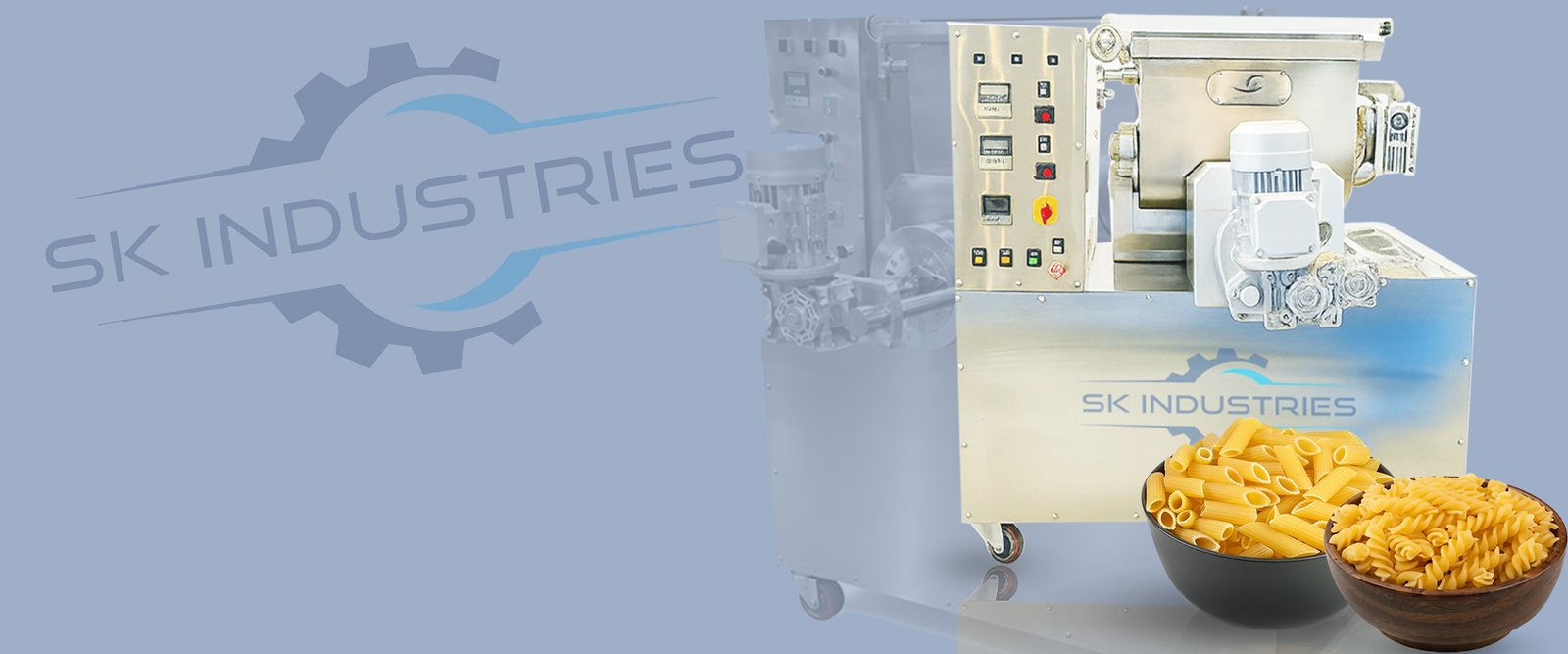
A pasta making machine mixes flour or semolina with water into dough, pushes it through a die under pressure and cuts the result to length. The die decides the shape, and the cutter decides the length. Most new units begin with short cut pasta such as macaroni, penne and fusilli. A short cut pasta making machine can make several of these by changing the die, so you rarely need a separate machine for each product.
The part that builds pressure is the pasta extruder. Its screw and barrel affect how smooth and dense the dough is, which in turn affects how the cooked pasta feels. Ask the maker to explain this part of the design, not just the motor rating.
Automatic or Semi-Automatic: A Simple Comparison
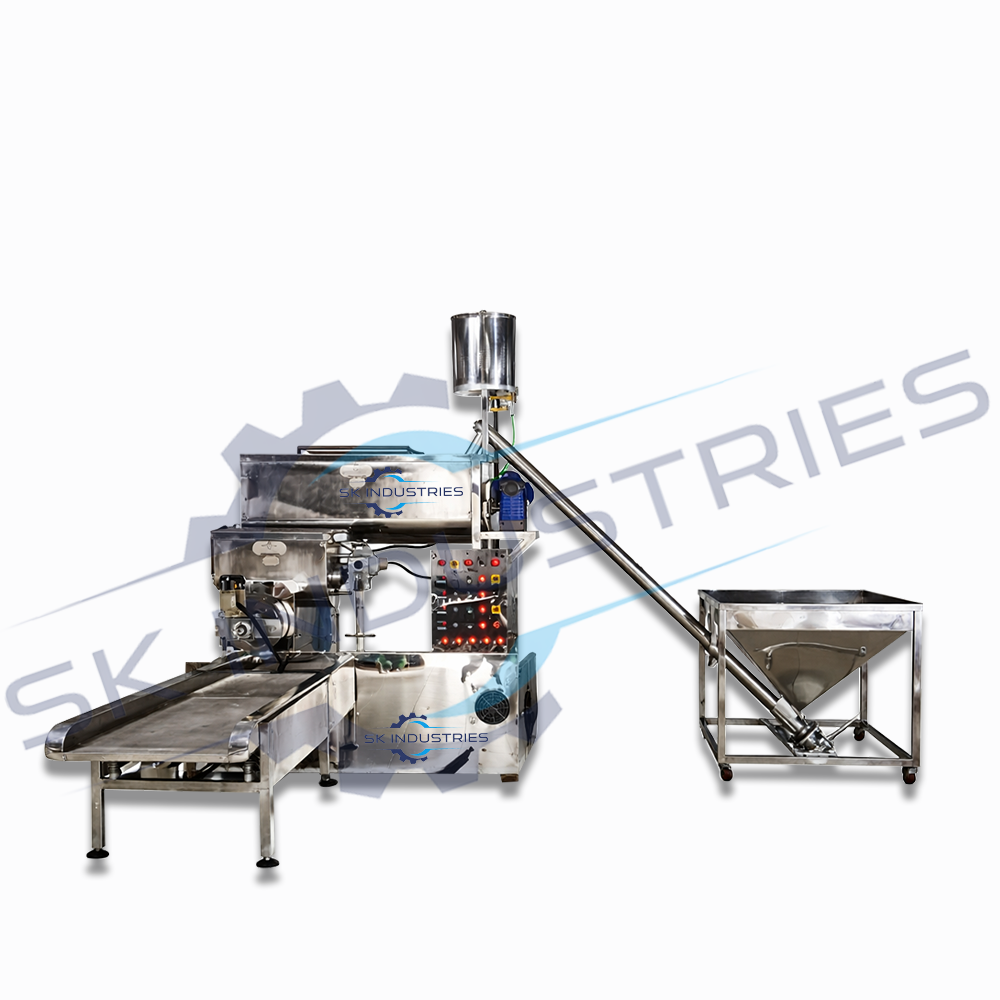
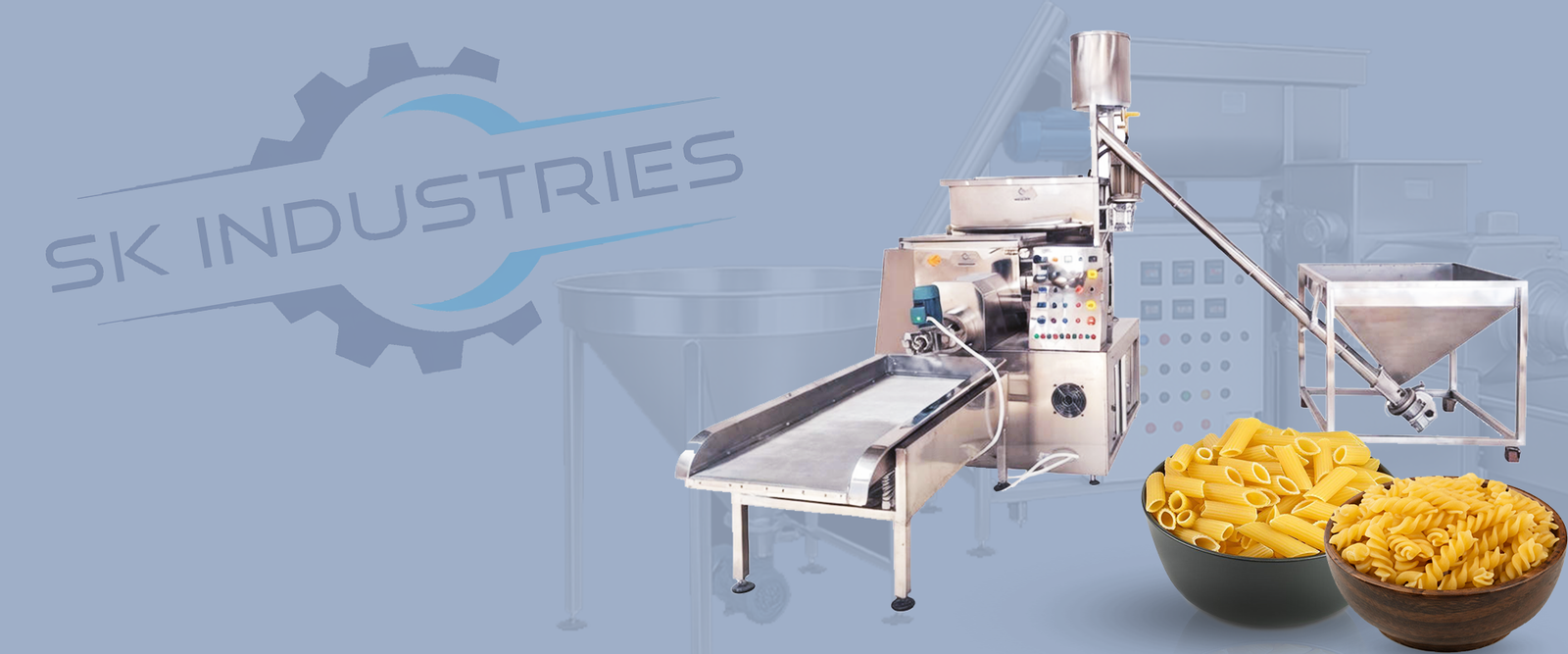
Both types work on the same basic process. The difference is how much of it you control by hand. SK Industries makes both, and the figures below are the ones published on its product pages:
| Point | Semi-automatic | Automatic |
|---|---|---|
| Control | More manual handling | PLC-controlled |
| Build | SS 304 food-contact parts | SS 304 food-contact parts |
| Output | Confirm rated output at quotation | Up to 200 kg per hour |
| Suits | Small units and lower budgets | Higher, steadier volumes |
Choose by the output you expect to sell in the first year. The automatic pasta machine makes sense if you already have regular buyers and want less manual work. The semi-automatic pasta machine is a lower-risk way to start, and you can grow later.
Checks to Make Before You Pay an Advance
- Visit and see it run. If you are in Delhi NCR, plan a visit to the workshop. Watch the machine run for a while, not just for a few minutes.
- Get the material in writing. Parts that touch dough should be SS 304 stainless steel. Ask for it to be stated in the quotation.
- Try your own raw material. Semolina and flour behave differently. A trial with your own material shows how the dough extrudes.
- Compare the scope. Check whether dies, installation, operator training and a dryer are included, so every quotation covers the same items.
- Ask about spare parts. Dies, cutter blades and belts wear with use. Ask how quickly they can be supplied.
What to Look at During a Workshop Visit
A visit is only useful if you know what to look for. Watch how dough is fed into the machine and whether the flow stays even. Look at the welds and the surface finish of the stainless steel, because rough joints are harder to clean. Ask the team to remove the die in front of you, so you can see how long cleaning takes. Check that the electrical panel is neatly wired and labelled, and listen for unusual noise or vibration while the machine is running.
Before you leave, ask for the power requirement, the floor space needed and any water or drying area the line will need. Planning these early avoids delays when the machine reaches your unit.
Remember the Rest of the Line
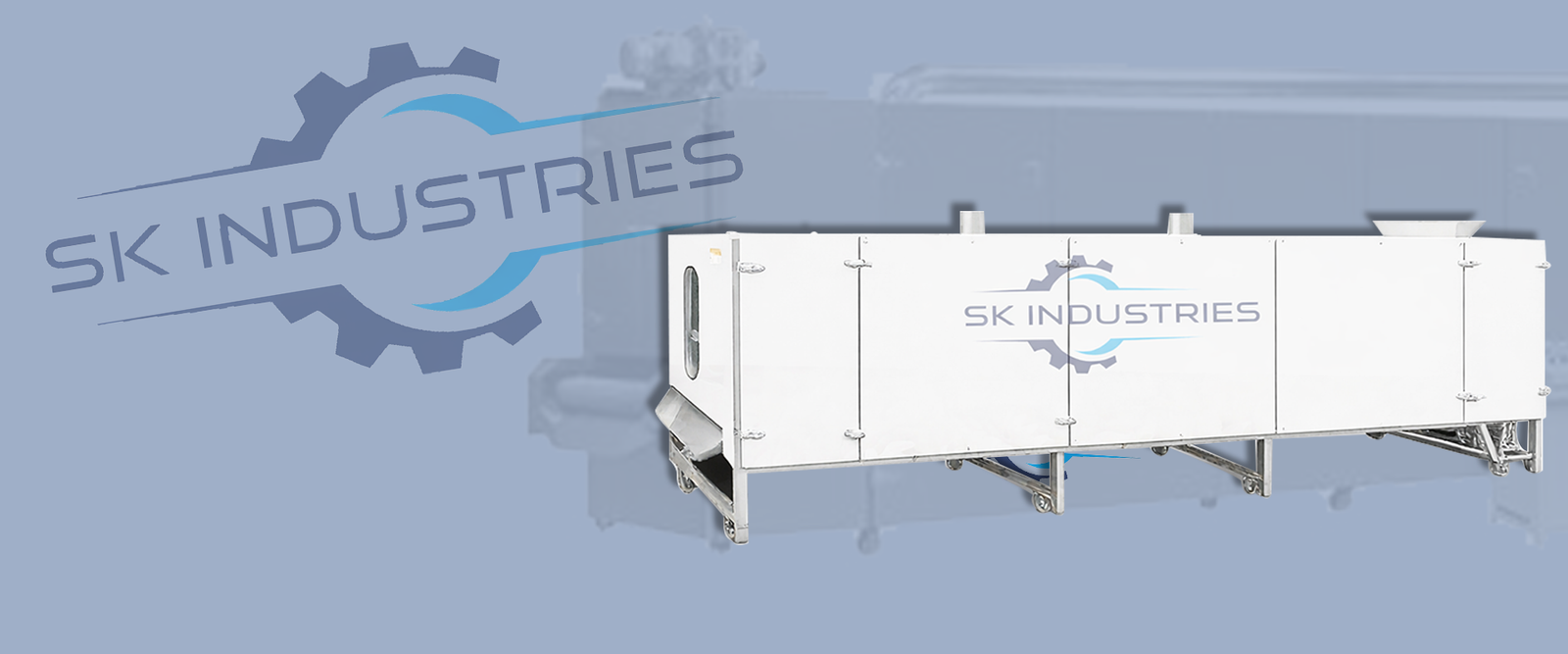
Fresh pasta leaves the extruder with a lot of moisture. For dried pasta it must go through a dryer before packing. The continuous conveyor dryer from SK Industries is rated at 450 to 500 kg per hour, so check that the dryer capacity sits comfortably above your extruder output. If you plan a complete line, also ask who will match the capacities of each stage.
Questions Buyers Often Ask
Can I visit a pasta machine workshop in Noida before ordering?
Yes. The SK Industries workshop is at A-66, Sector 8, Noida. Please contact the team before you travel so they can arrange a time and show you a machine that is running.
Do you supply machines outside Noida?
Yes. SK Industries supplies pasta making machines to customers across India. Delivery time depends on the machine and the location, and the team confirms it with the quotation.
Is a semi-automatic machine enough for a new pasta unit?
For a small unit with limited volume, often yes. It has the same SS 304 build as the automatic model at a lower entry cost. If you expect steady, higher volumes, an automatic PLC-controlled machine saves manual work.
Do I need a dryer along with the pasta making machine?
For dried pasta, yes. Freshly extruded pasta holds a lot of moisture and has to be dried before it can be packed and stored.
Making the Final Choice
A good maker will ask about your target output, your pasta shapes and your space before suggesting a model. SK Industries has made food processing machinery in Noida for over 20 years. If you share your plan, our team will suggest a configuration and explain why it suits you.