Delhi NCR has a huge appetite for packed and ready-to-cook food, from Gurugram and Faridabad to Ghaziabad and Delhi itself. That is why many first-time entrepreneurs, snack makers and food retailers start looking at pasta. If you are searching for pasta making machine manufacturers in Delhi NCR, the machine is only one part of the decision. How you plan the unit around it matters just as much. This guide walks through that planning in the order you will need it.
Start With Space, Not With the Machine
Land and rented space cost more in and around Delhi than in many other regions, so most NCR units work with a limited floor area. Before you compare machines, list what the unit needs to hold:
- Raw material storage for flour or semolina
- The mixing and extruding area
- A drying area, which often needs more room than the extruder itself
- Packing and finished-goods storage
Share this list, along with your available floor area, with the manufacturer. A maker who knows your space can suggest a layout, and a compact semi-automatic setup can be a sensible choice when room is tight.
Decide Your Product Range First
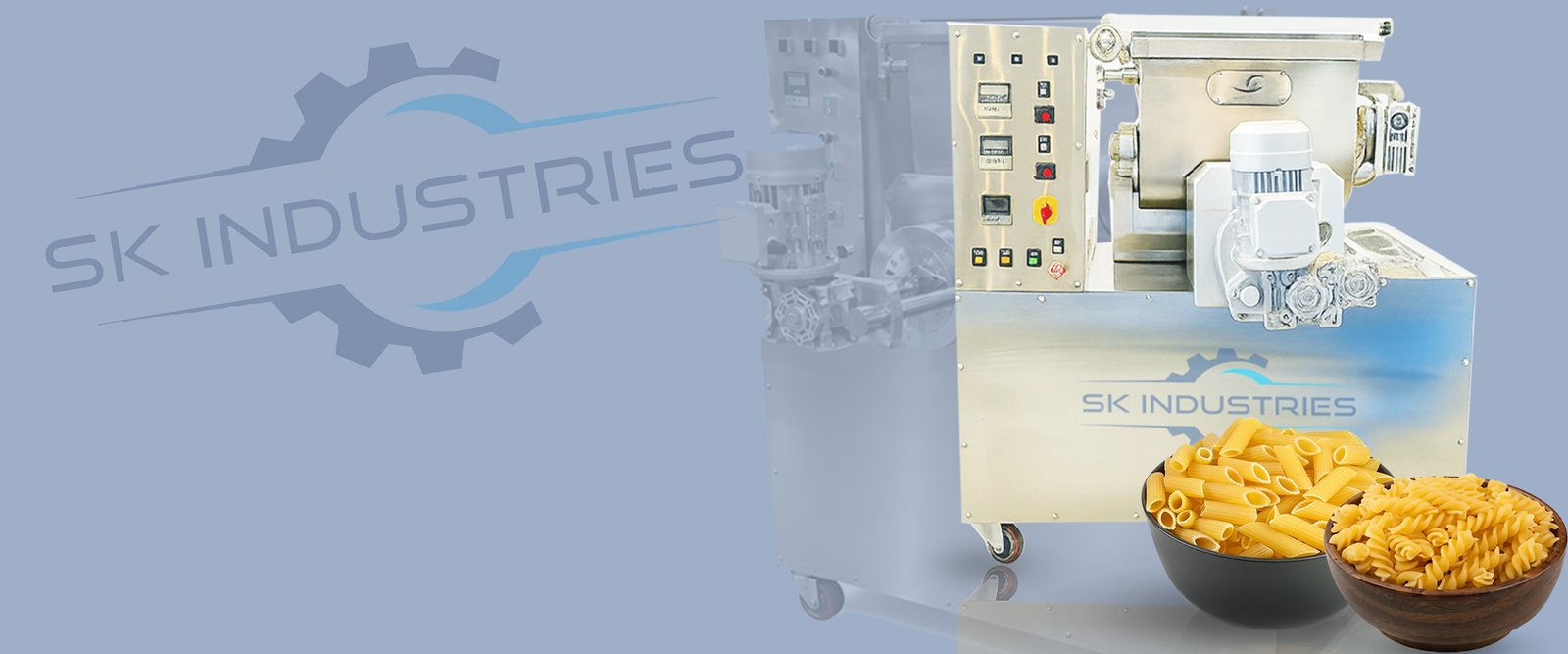
The shapes you want decide the machine. Short cut pasta is the usual starting point, and a macaroni making machine can often make related shapes by changing the die. If you also want vermicelli, remember that it is a different process. A vermicelli making machine has its own die and cutting setup, so tell the manufacturer about it before the line is designed.
The length of each piece is set by the pasta cutting machine fitted after the die. Uneven cutting leads to waste, so ask how the cutter speed is matched to the extrusion rate.
Match Capacity to Your Real Orders
It is easy to buy more capacity than you can sell. A simple way to think about it:
| Your situation | What to consider |
|---|---|
| Starting out, few regular buyers | Semi-automatic machine with a lower entry cost |
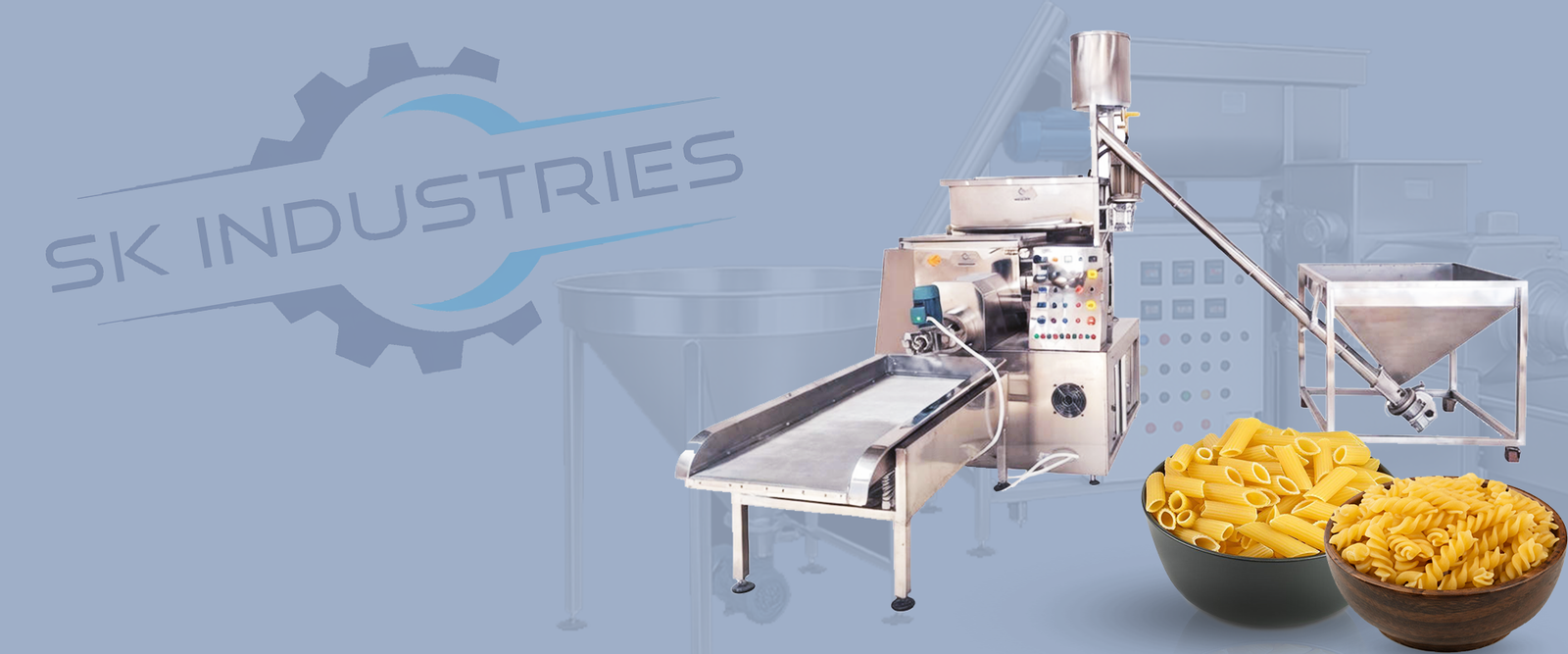
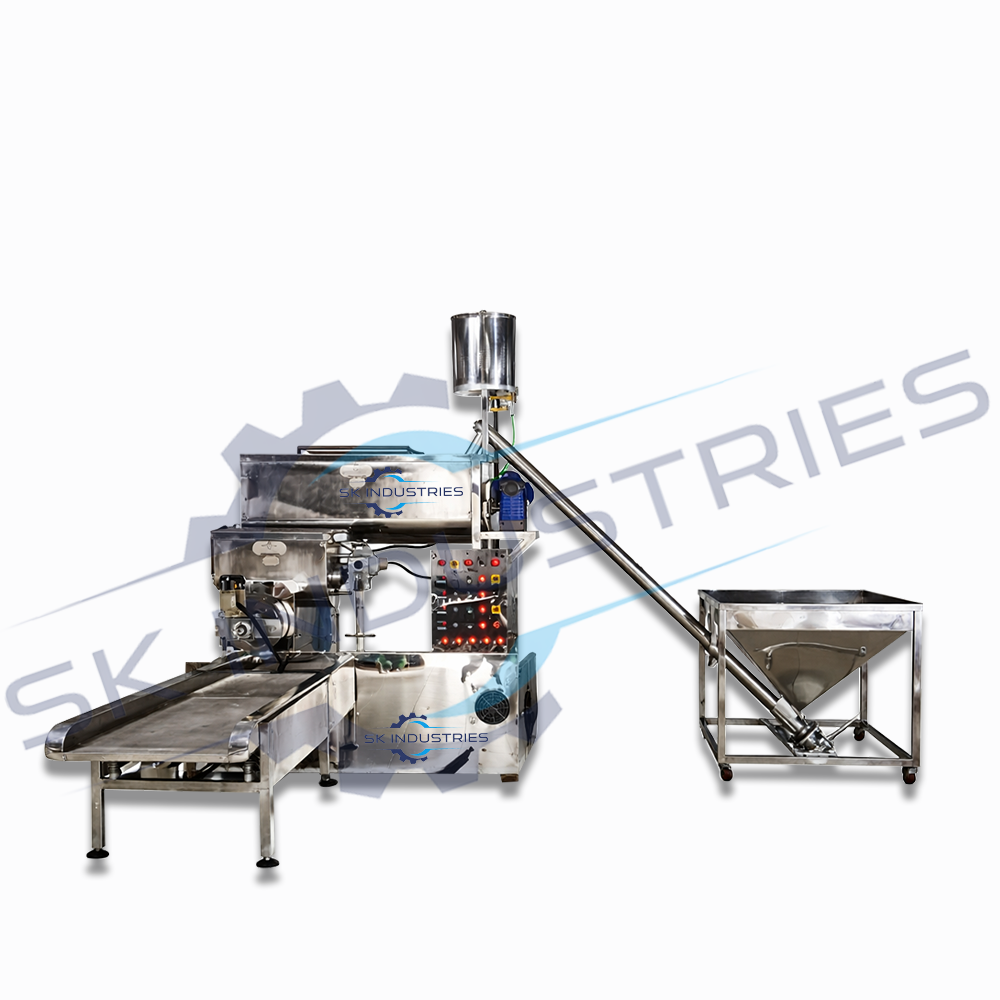
| Steady orders, want less manual work | Automatic PLC-controlled machine, which SK Industries rates at up to 200 kg per hour |
| Planning a complete production line | Matched extruder, cutter and dryer, such as a penne pasta plant |
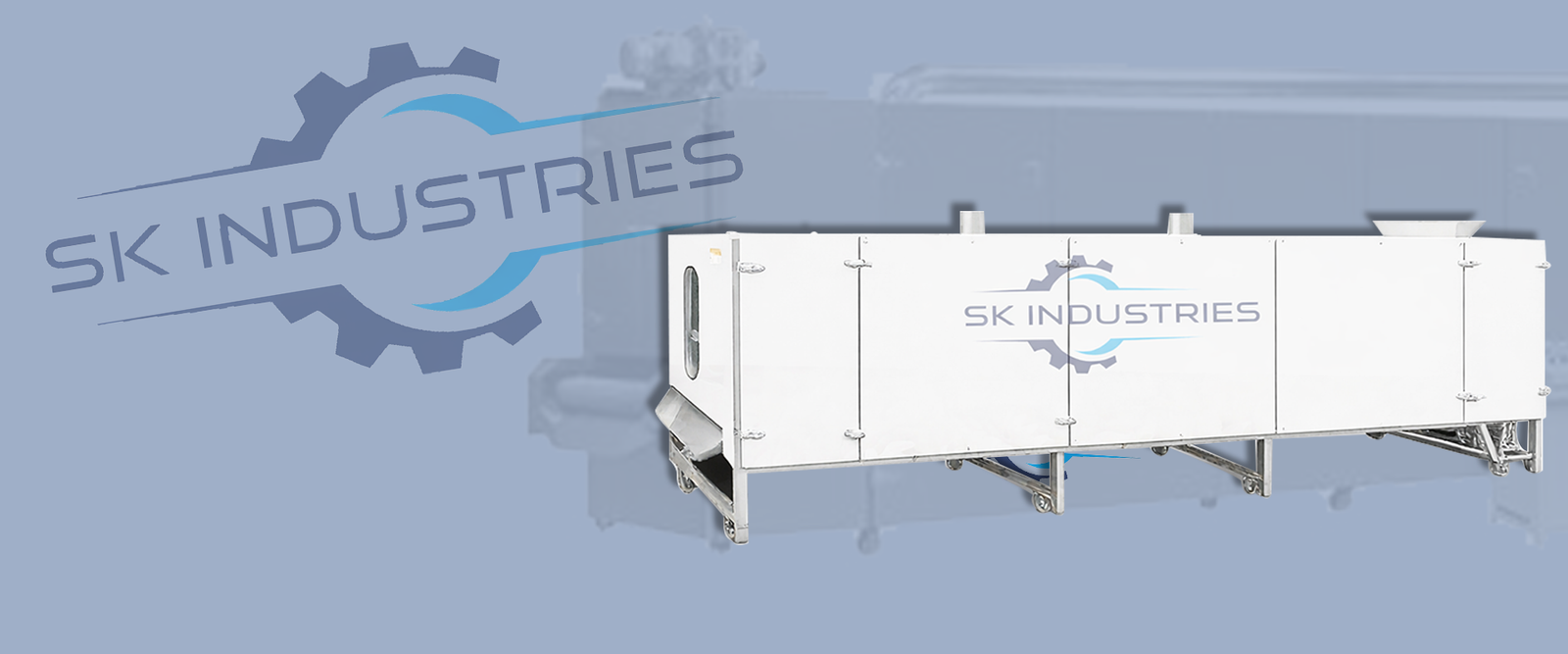
If you will sell dried pasta, the dryer must keep up. The continuous conveyor dryer from SK Industries is rated at 450 to 500 kg per hour, so check that its rating is comfortably above your extruder output.
How to Read a Quotation
Two quotations can look similar and still cover different things. Go through each one line by line and compare:
- Material of the parts that touch dough (it should be SS 304 stainless steel, stated in writing)
- Number of dies included, and the price of extra dies
- Whether installation, commissioning and operator training are included
- Whether a dryer or cutter is part of the price
- Delivery time and the way spare parts are supplied
Also confirm which licences your food unit needs before you start. Requirements such as FSSAI registration depend on the size and type of your business, so check with the relevant authority.
Keep Cleaning and Hygiene in the Plan
Pasta is a food product, so the machine must be easy to clean every day. Ask how the die is removed, how long it takes and which parts need to be taken apart for washing. Smooth stainless steel surfaces with few corners are quicker to clean than rough or crowded ones. A machine that is hard to clean tends to be cleaned less often, and that affects both product quality and your customers' trust.
Decide who in your team will be responsible for cleaning, and ask the manufacturer to include this in operator training.
Look Beyond the Purchase Price
The price on the quotation is only the first cost. A few more points affect your monthly expense:
- Power use. Ask for the total connected load of the line, so you can check it against the power available at your unit.
- Labour. A semi-automatic machine needs more hands during running, while an automatic one needs fewer but costs more at the start.
- Wear parts. Dies and cutter blades wear with use. Ask how long they usually last with your raw material and what a replacement costs.
- Raw material. Test your own flour or semolina in a trial, because the dough quality changes how the machine performs.
Asking these questions early helps you work out a realistic cost per kilogram of pasta, which matters more than the machine price alone when you set your selling rates.
Local Support Makes a Difference
A pasta line may run for long hours, and a stopped machine costs money. SK Industries is based in Noida, at A-66, Sector 8, so buyers in Delhi and the surrounding NCR cities can visit and see a machine running before deciding. If you want details for the capital, you can read about pasta making machine manufacturers in Delhi on our location page.
Common Questions From NCR Buyers
Which pasta shapes should a new unit in Delhi NCR start with?
Most new units start with short cut shapes such as macaroni, penne and fusilli, because one machine can make several of them by changing the die. Add more shapes later once the first product sells steadily.
Can the same machine make pasta and vermicelli?
Not usually. Vermicelli is made on a separate machine with its own die and cutting setup. Tell the manufacturer which products you plan to make so that the line is planned correctly.
Does SK Industries supply machines to Delhi and nearby cities?
Yes. SK Industries is based in Noida and supplies pasta making machines to Delhi, the wider NCR and other states. The team confirms the delivery time with each quotation.
A Sensible Next Step
Write down your floor area, the shapes you want and the quantity you hope to sell in the first year. With these three points, any serious manufacturer can suggest a suitable setup. SK Industries has made food processing machinery in Noida for over 20 years, and our team is happy to review your plan and explain the options.