People who search for pasta plant manufacturers are usually past the idea stage. They want to know what a full plant actually contains, how the parts must fit together, and what to check before an order. A pasta plant is not one machine. It is a line of connected stages, and a weak link in any stage limits the whole line. This guide walks through the plant in the order your pasta travels, and shows what to ask at each step.
The Stages of a Pasta Plant
Whether you speak to small workshops or larger pasta plant suppliers, the stages are broadly the same. The table below shows what each stage does and the question worth asking about it.
| Stage | What it does | Question to ask |
|---|---|---|
| Mixing | Blends semolina or flour with water into dough | How is the dough kept even? |
| Extrusion | Pushes dough through a die under pressure | Is the chamber vacuum-assisted? |
| Cutting | Cuts the extruded pasta to length | How is cutter speed matched to output? |
| Drying | Removes moisture so pasta can be packed and stored | Is the dryer sized above the extruder? |
| Conveying | Moves pasta between stages | Are contact parts food-grade steel? |
Extruder and Cutter: Where Shape and Texture Are Decided
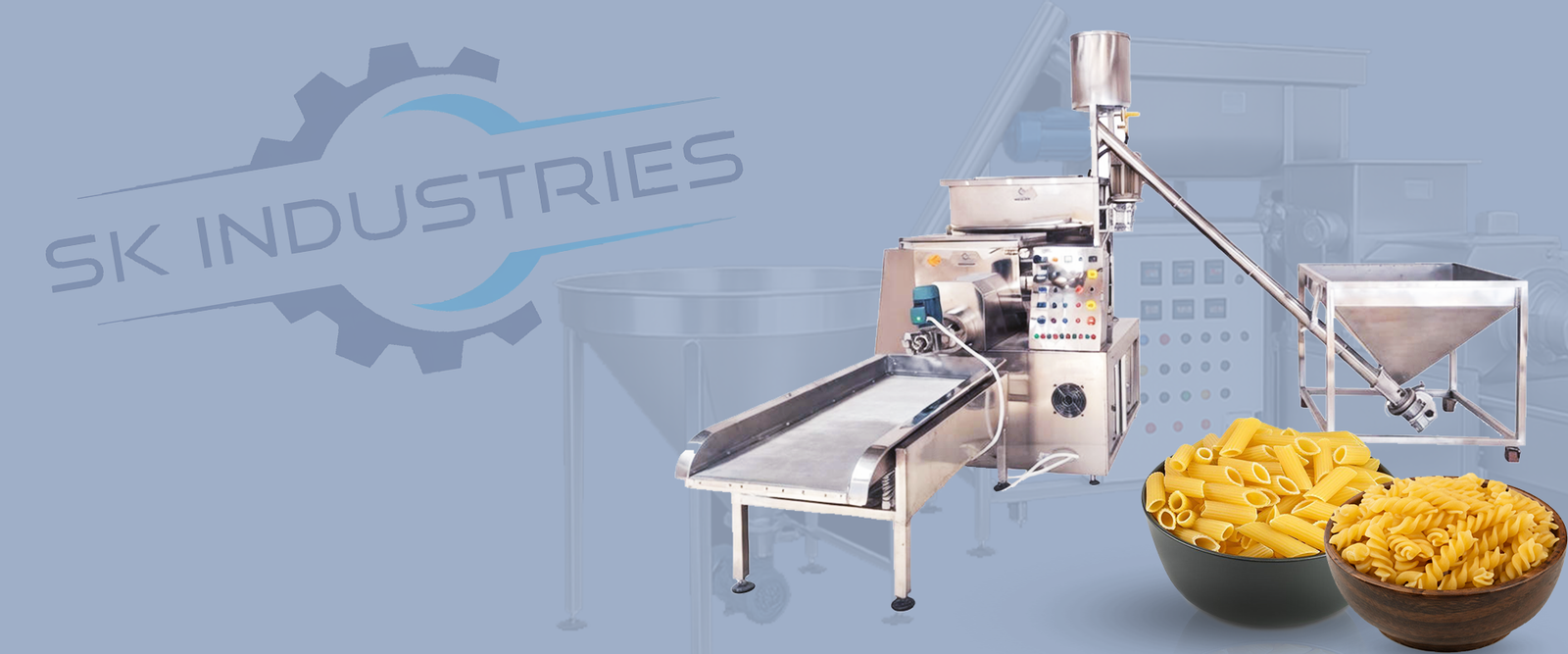
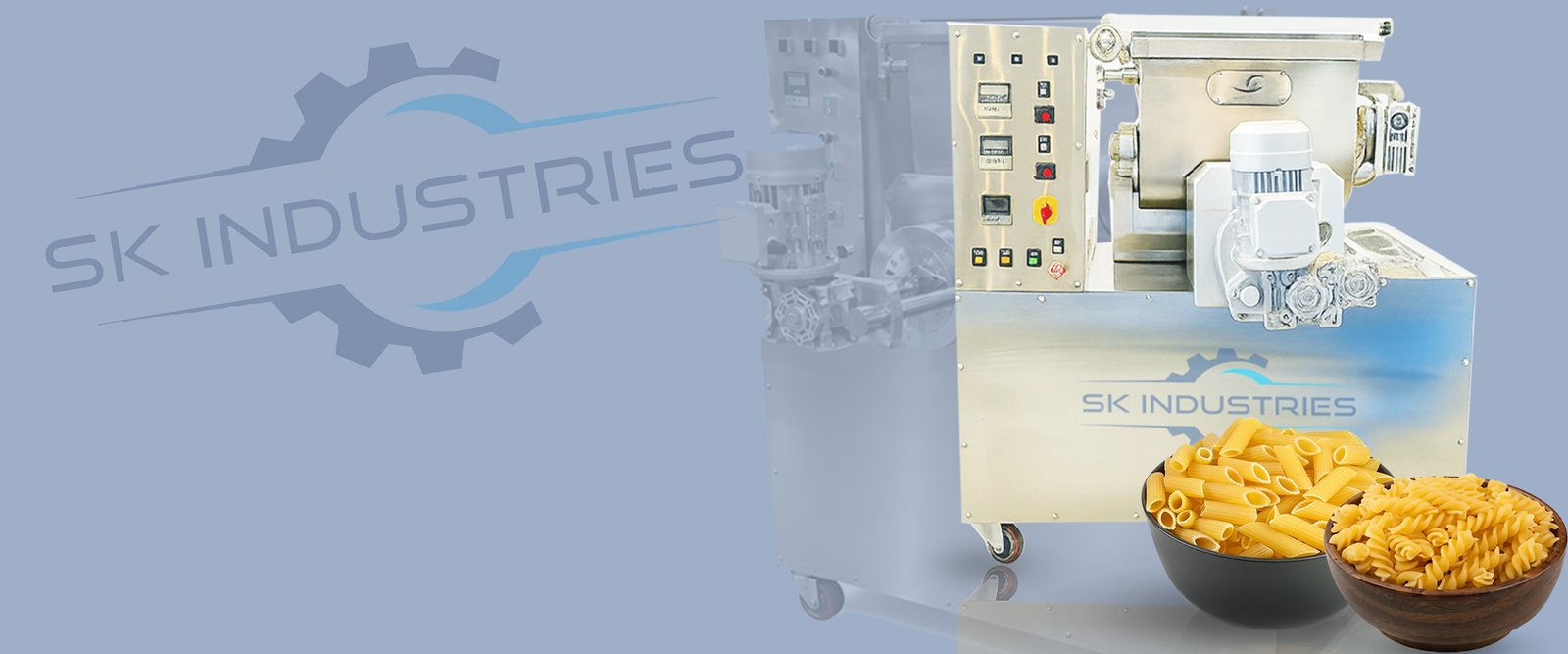
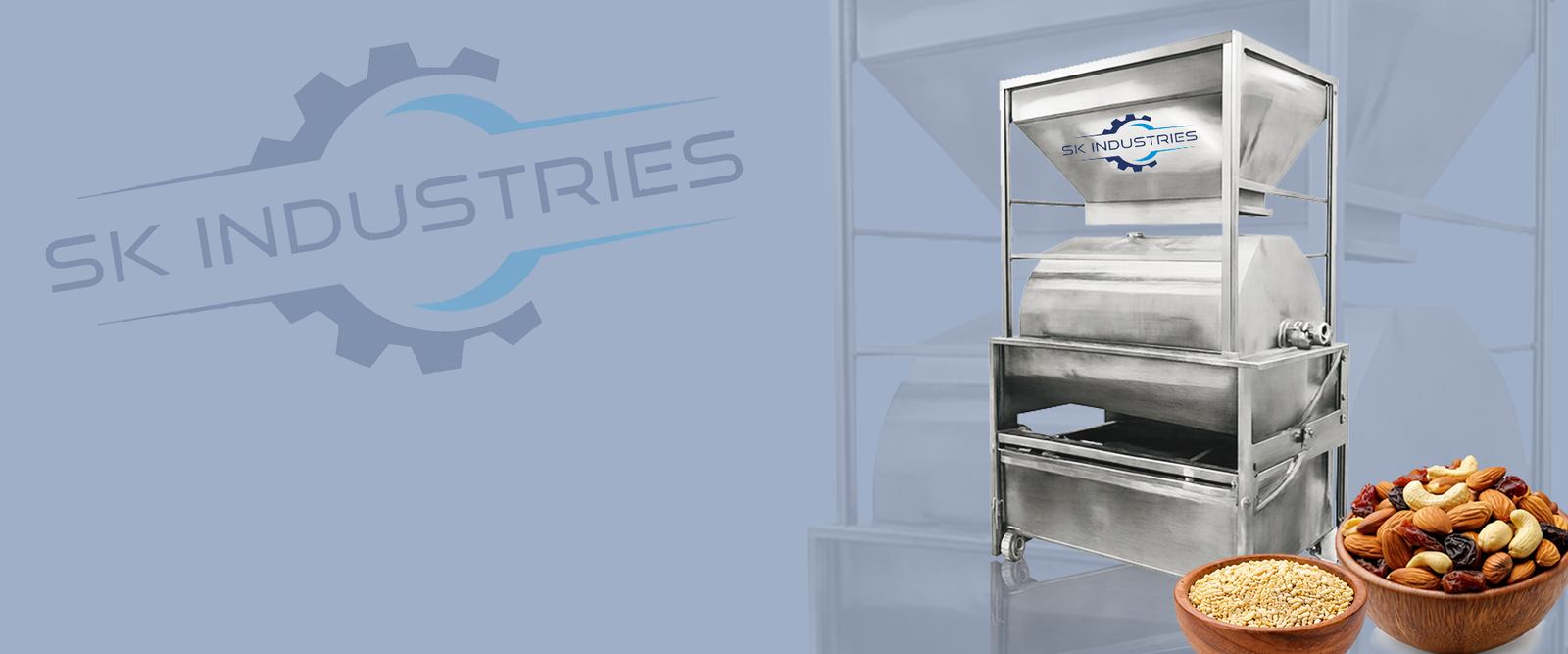
The pasta extruder is the heart of the line. A screw pushes the dough through a die, and the die gives the pasta its shape. A vacuum-assisted mixing chamber removes air pockets from the dough, which gives a denser, smoother pasta. SK Industries builds its extruders with SS 304 contact parts and a geared main drive with VFD speed control.
Right after the die, the pasta cutting machine slices the rope of pasta into pieces. Its blade speed should follow the extruder speed, so that the length stays even when output changes. For shapes like penne, the cutter and die work together, as described on our penne pasta plant page.
Drying: The Stage People Underestimate
Freshly cut pasta holds a lot of moisture. Without proper drying it cannot be packed or stored, so the dryer matters as much as the extruder. There are two common types:
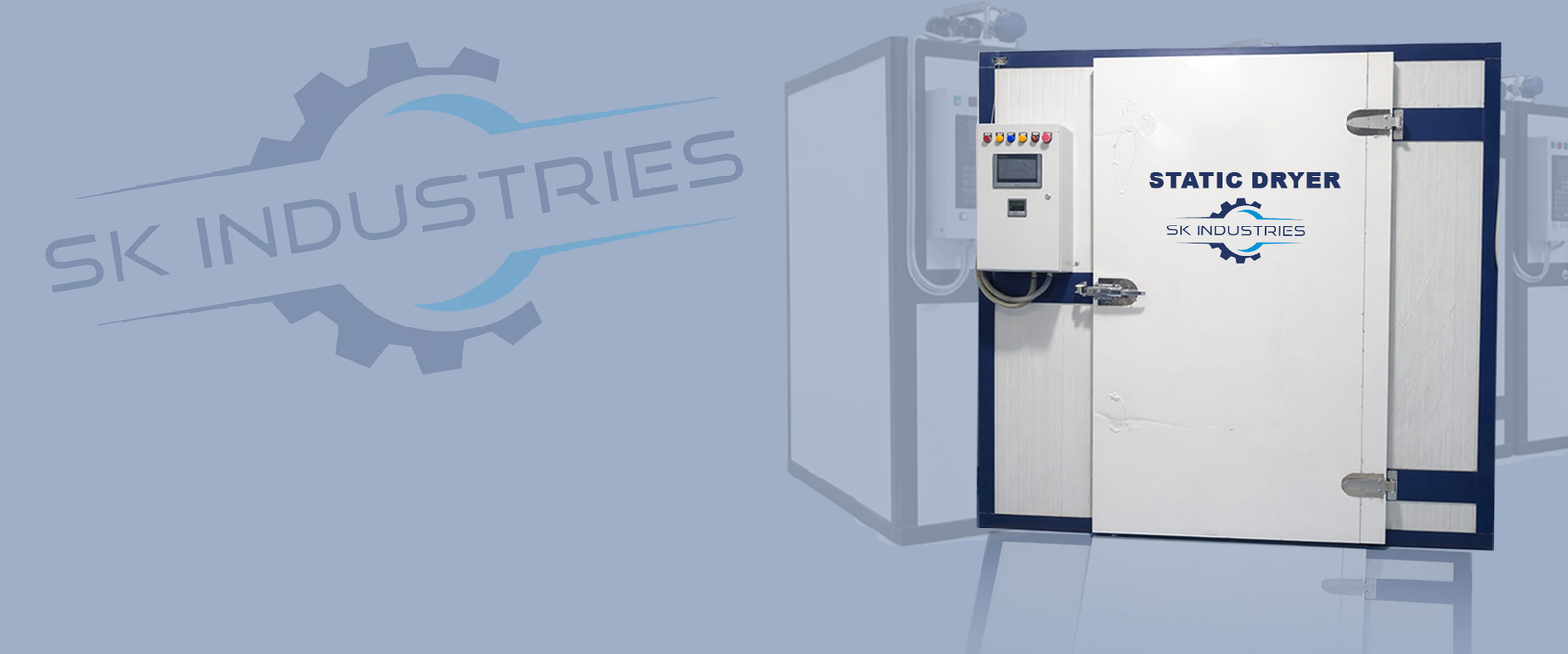
- Static tray dryer. Pasta is spread on trays and dried in batches. SK Industries lists its static dryer at 250 to 300 kg per batch with 80 trays and 4 trolleys. It suits smaller or varied production.
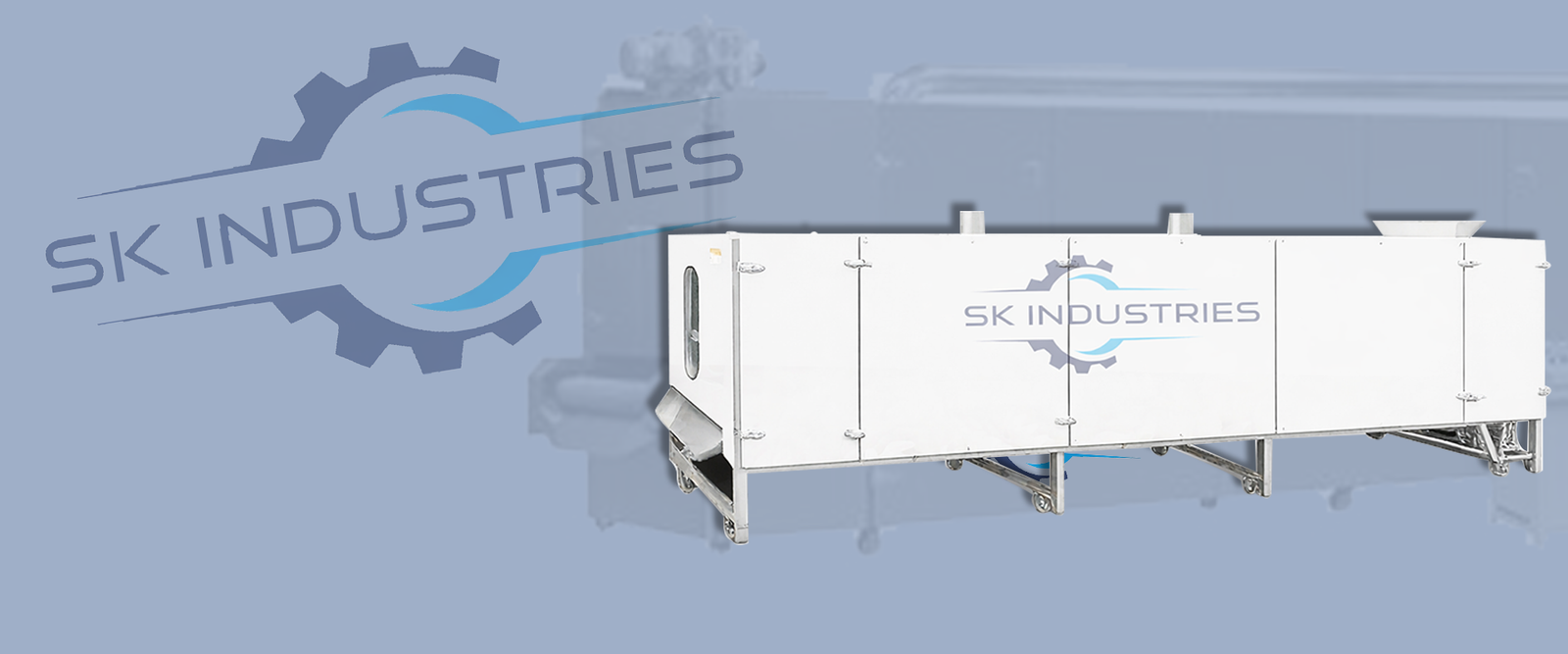
- Continuous conveyor dryer. Pasta travels through the drying zone on a belt. The continuous conveyor dryer is listed at 450 to 500 kg per hour with a 7-layer SS 304 mesh belt. It suits steady, higher volumes.
Ask the maker to explain drying time and the moisture you can expect at the end. These depend on the shape and the thickness of your pasta, so ask for them for your own products.
Match the Capacity of Every Stage
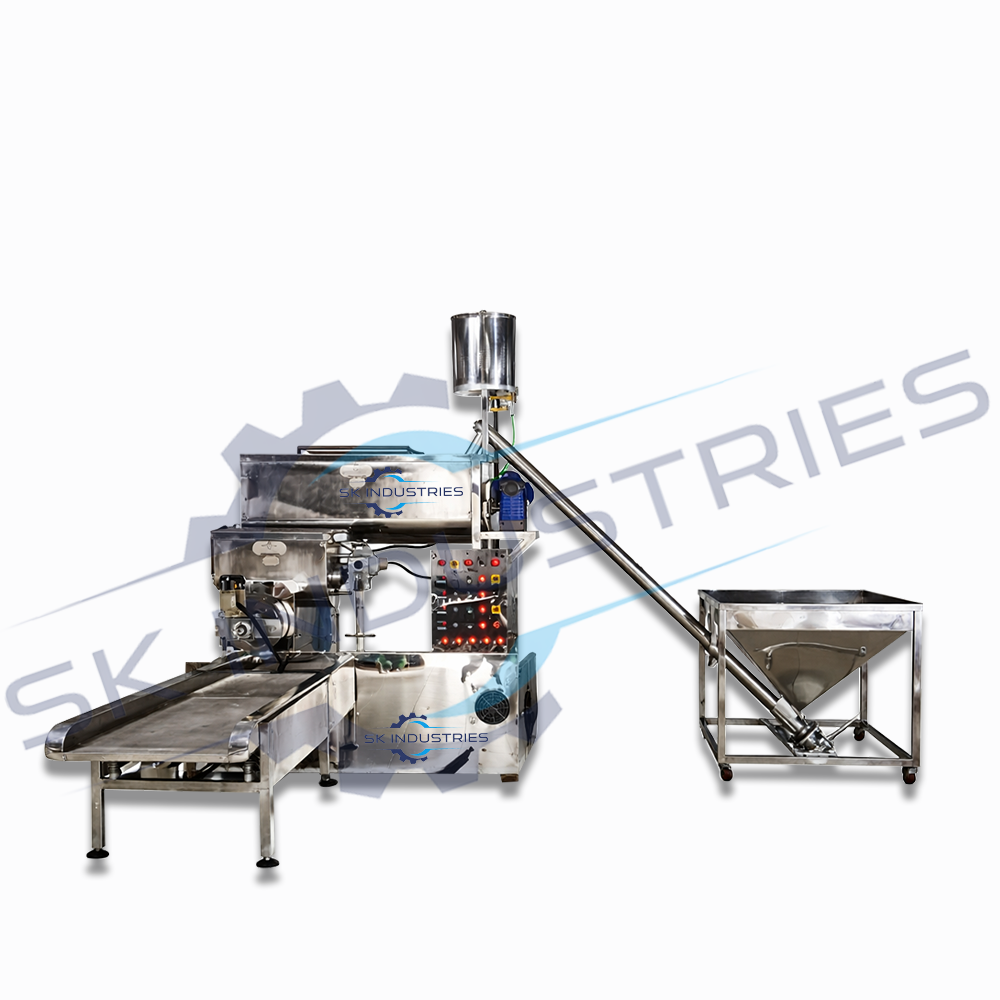
A plant is only as fast as its slowest stage. The automatic pasta machine from SK Industries runs at up to 200 kg per hour. If your dryer cannot take that output, pasta will pile up before drying, and if the dryer is far larger than needed, you pay for capacity you will not use. Ask for the rated capacity of each stage in writing, and check that they fit together for your target output.
Shapes matter here too. Our Italian pasta plant page explains how interchangeable dies let one line make macaroni, penne and fusilli, so you can add shapes without a new plant.
Plan the Layout Before the Order
A pasta plant needs more floor space than most first-time buyers expect, because the dryer is usually the largest unit. Draw a simple sketch of your building and mark the power point, the entry door for raw material and the exit for finished pasta. Pasta should move in one direction, from mixing to packing, without crossing back over itself.
Leave room around each unit for cleaning and maintenance. A machine that cannot be reached for washing will not be washed properly. Ask the manufacturer for the footprint of every stage and compare it with your sketch before you confirm anything.
Dies, Blades and Spare Parts
Dies and cutter blades wear with use, and worn parts change the look of your pasta before anything breaks. Ask which dies are included in the price, what extra dies cost and how long they usually last with your flour. Bronze and Teflon dies behave differently, so ask which one suits the shapes you plan to make.
Also ask how spare parts are supplied and how quickly. A plant that waits a week for a blade loses a week of sales. Written answers in the quotation are better than promises on a call.
Questions Buyers Ask
What is included in a pasta plant?
A complete pasta plant covers mixing, extrusion, cutting and drying. Some plants also add conveying between stages and packing at the end. Ask each manufacturer to list every stage in the quotation.
Is a pasta plant the same as a pasta making machine?
Not exactly. A pasta making machine usually means the mixing and extruding unit. A pasta plant is the full line, which also includes cutting, drying and the equipment that moves pasta between stages.
Should I choose a static dryer or a continuous dryer?
A static tray dryer works in batches and suits smaller or varied production. A continuous conveyor dryer carries pasta through the drying zone on a belt and suits steady, higher volumes. Your daily output decides which fits.
Can one plant make several pasta shapes?
Yes. Short shapes such as macaroni, penne and fusilli can be made on one line by changing the die and cutter setup, so you do not need a new plant for each shape.
Choosing With Clear Eyes
The most useful quotation from any of the pasta plant manufacturers you speak to is the one that lists every stage, its rated capacity, the material of the contact parts and what is included. SK Industries has built food processing machinery in Noida for over 20 years. Share your target output and shapes, and our team can suggest a plant layout and explain how each stage is matched.